Bosnia and Herzegovina

C:\Users\139942\AppData\Local\Microsoft\Windows\INetCache\Content.MSO\94320DC9.tmp

At this point of the Virtual Nomad journey, Amsterdam (10) already knows all the countries in the world and the capitals of most, if not all, of them. Therefore it is not a surprise that he can accurately place Bosnia and Herzegovina on the map. For the older children, Fez Karelia (14), Lisboa (17) and Lisboa’s boyfriend Nicosia (17), the name of the country rings a bell and they know that it has something to do with a conflict. For those of us who lived in Europe in the early 90s, the Bosnian War was a conflict that felt very close. 

For information, the participating Virtual Nomads are presented with city and/or place pseudonyms. The cities selected are random and have nothing to do with the origins of the people themselves.

But first, as always, food.

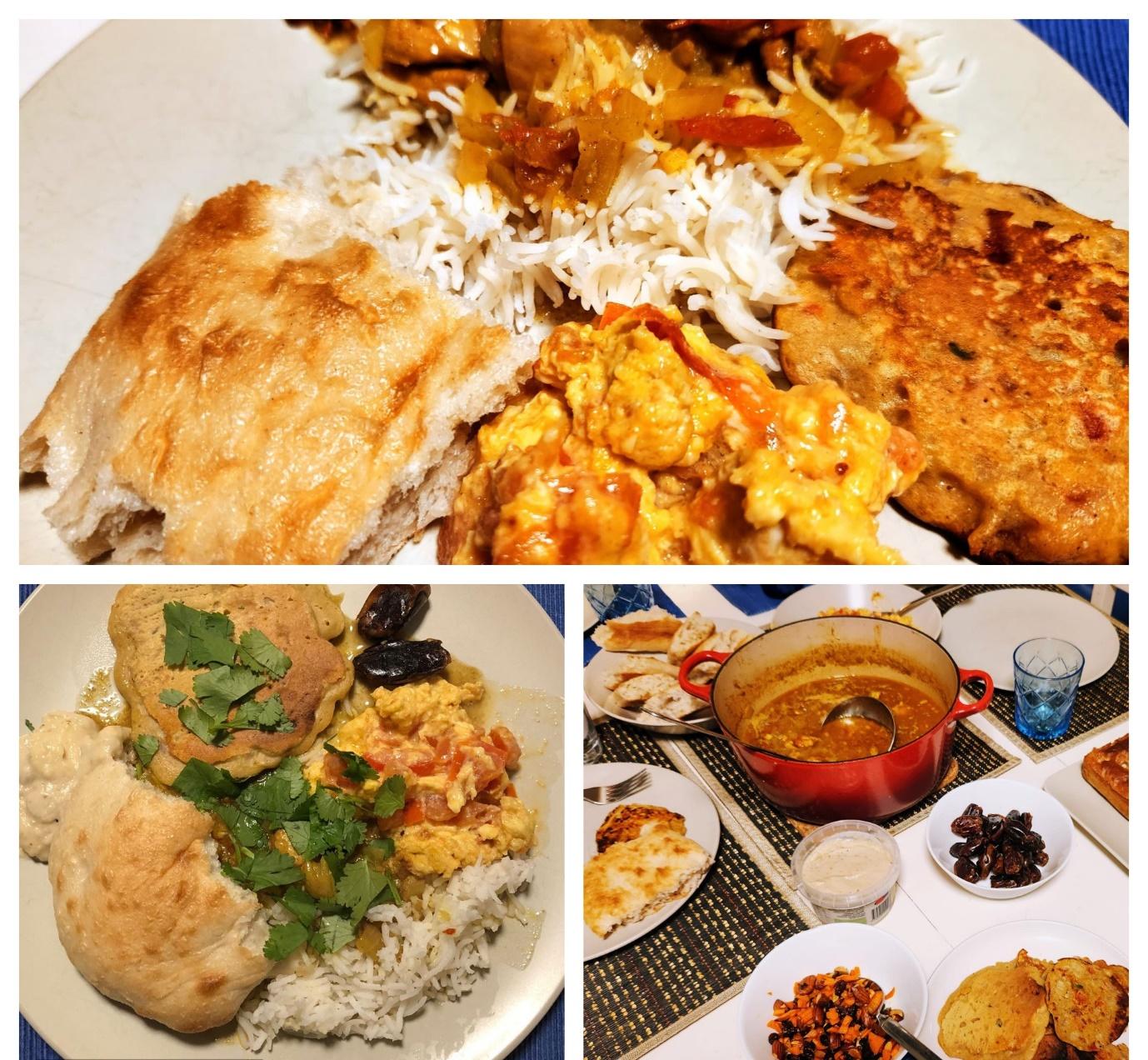
Delicious burek and Bosanski Lonac 

The Bosnia and Herzegovina food stop is a lunch that gathers 12 Virtual Nomads. There are a few Balkan restaurants in Sydney but we want to enjoy the takeaway burek from the Burek Guy in Dee Why and we have a couple of great recipes. So cooking it is!

C:\Users\139942\OneDrive - UTS\Pictures\bosnia 3.jpg

My partner Johannesburg Karelia collects a beef and a cheese and spinach burek from the Burek Guy in Dee Why. In our previous stop in Albania, some of us tried burek from the Balkan Cafe, which was very good, but for most of the Virtual Nomads this is their first burek. It’s very crispy, very yummy and quite heavy, being made of thin flaky pastry with different fillings. Burek is commonly served in Albania, Turkey, Bosnia and Herzegovina, Bulgaria, Serbia and North Macedonia. It is well received ‒ oily but delicious and very filling.

C:\Users\139942\OneDrive - UTS\Pictures\bosnia 4.jpg

For the meat eaters, we have bosanski lonac (stew) – a popular dish of Bosnian traditional cuisine, also referred to as the Bosnian national dish. Traditionally it was made in a ceramic pot in a pit in the ground, but Acapulco Kilimanjaro prepares it with a slow cooker. The dish includes different types of meat and many different vegetables. The ‘lonac’ part of the name refers to the type of ceramic pot used to cook it in. Apparently men in the mines would gather ingredients on their way to work and then put all of them in a clay pot (meat, vegetables, herbs) to cook while they worked. Once the demanding and dangerous work was finished, they had a delicious, slow-cooked dinner waiting for them. 

C:\Users\139942\OneDrive - UTS\Pictures\bosnia 6.jpg

We accompany the stew and burek with stuffed vegetables and a Bosnian salad. The vegetables – capsicum (pepper or paprika), zucchini and onion – are filled with rice, Bosnian sauce and a meat substitute (that turns out to be very yummy). It is a very easy dish for me to prepare. It takes some time for the vegetables to soften in the oven before the filling is added. After that it is a quick process back to the oven and then to the plates of Virtual Nomads. The lunch is sealed with a delicious raspberry liqueur.

Conflict and more conflict

C:\Users\139942\OneDrive - UTS\Pictures\bosnia 5.jpg

The early history of Bosnia and Herzegovina shows that the tensions between different communities have existed for centuries. Bosnia and Herzegovina were once part of the Roman Empire (Dalmatia) but the roots of modern Bosnian are from the 6th and 7th  century when the Slavic tribes arrived and tensions arose between different communities. The two main tribes were the Croats and the Serbs, and they spent a lot of time fighting. The Ottomans came in 1383 and slowly the area converted into Islam. Ottomans were in the region for a few centuries and once their power diminished, the Croats and the Serbs were fighting for power again. Austria annexed Bosnia to its empire and the eruption of the First World War was sparked in June 2014 when an angry Serbian extremist shot the heir to the Austrian empire, Archduke Franz Ferdinand, in Sarajevo.  

Yugoslavia was a country that existed between 1918 and 1992 and was constituted of the six (socialist) republics of Slovenia, Croatia, Bosnia and Herzegovina, Serbia, Macedonia and Montenegro. The coexistence was not always easy. For example, during the Second World War the different ethnicities recommenced killing each other. After the war, Yugoslavia was united under the rule of Josep Tito, who ruled the People’s Republic of Yugoslavia until his death in 1980. Then the artificial unity started to crumble again. 

C:\Users\139942\OneDrive - UTS\Pictures\bosnia 1.jpg

Bosnia and Herzegovina were part of the former Yugoslavia and once it disintegrated, Bosnia and Herzegovina declared national sovereignty on 15 October 1991. A referendum was held on 29 February 1992 favouring independence and the country was formally recognised by the European Community and the United Nations. Bosnian Serbs had boycotted the vote as they felt a closer relationship with the Serbian part of ex-Yugoslavia. After the referendum, Serbian forces surrounded Sarajevo, the capital of Bosnia and Herzegovina. This was followed by a four-year-long siege (1992-1995) that resulted in over 10,000 deaths, many of them children. The siege of Sarajevo not only resulted in devastating loss of human life but also the destruction of most of the cultural and religious buildings in the city.  

The Bosnian War (1992-1996) claimed more than 100,000 lives and 20,000 – 50,000 women were raped as part of the strategy of ethnic cleansing and genocide. Millions of people left the region as refugees and horrific events took place, the most famous being the massacre of Srebrenica that saw over 8,000 Muslim men and boys murdered. The war ended on 1 November 1995 with the signing of the Dayton Agreement. 

Three books on war and terror

Many of the translated contemporary books from Bosnia and Herzegovina are about the war and, as one translator explains, unfortunately conflict and atrocities seem to be a phenomenon that raises interest in an otherwise relatively unknown region. The international literature from Bosnia and Herzegovina had been carried by a few authors, including Ivo Andric. His book The Bridge on the Drina has been described as an iconic book from Bosnia and Herzegovina, and delivered him a Nobel Prize for Literature in 1961. Despite being born in Bosnia and having Croatian heritage, Ivo self-identified as a Serb and therefore this book will need to wait until the Virtual Nomad stops in Serbia, which will be in the distant future (because Virtual Nomads like to take their time to enjoy every stop).

Therefore, I turn to literature from authors that identify themselves as being from the region. 

C:\Users\139942\OneDrive - UTS\Pictures\bosnia.jpg

Zlata’s Diary (Zlata Filipović, 1993)

Mimmy, I am afraid of WAR” 

My first book is Zlata’s Diary by Zlata Filipović. Known as the ‘Anne Frank of Bosnia’, it is a diary of an ordinary teenager of an educated, affluent family going through the siege in Sarajevo. What starts as a normal, and quite boring, description of friendship issues and pop stars gradually escalates to the horrors of war ‒ friends dying, ever present hunger and cold, a mother who is losing her mind. It is not a particularly fine piece of writing, but the context itself pushes through like a freight train and makes it a harrowing read. It also shows the solidarity people feel in horrendous conditions – neighbours sharing the contents of the parcels they get from abroad, teachers teaching students even if they need to reach the students by running to their homes under sniper fire, birthday celebrations and people going to great lengths to find bird food for Zlata’s pet. And there is some dark humour as well, including the name Zlata’s family and friends give to ‘their own’ sniper. But above all, it is a description of the atrocities of war through the eyes of a child. 

Some people compare me with Anne Frank. That frightens me, Mimmy. I don’t want to suffer her fate.”

C:\Users\139942\OneDrive - UTS\Pictures\bosnia book 2.jpg
C:\Users\139942\OneDrive - UTS\Pictures\Bosnia book.jpg

Goodbye Sarajevo (Atka Reid, 2011)

I then move to another book about Sarajevo, Goodbye Sarajevo, which is based on another true story of the Sarajevo siege. It is the story of two sisters. One travels to Croatia as a refugee and the other stays in Sarajevo to take care of younger siblings (of a family of 10 siblings). Written by sisters (as fictionalised versions of themselves), the story jumps from one sister to another. One (Hana) describes the sense of emptiness that permeates the refugee’s life ‒ uncertainty and the awkwardness of depending on others’ mercy for survival. The other (Atka) tells of the horrors of war and the siege ‒ death, hunger and destruction. The writing, again, is not highly skilled with much time spent on details and unnecessary descriptions, but there is a lot of heart in the story. Reading it is to understand what living in the inhumane conditions of war can feel like, but also what refugees go through when they leave their homes, penniless, rootless and hopeless. It is a human story that grows on the reader. It is based on the diaries that both sisters kept during their time apart. Hana describes her life as a refugee with two of her sisters, mainly in Zagreb, and their struggle to have enough money to buy food and for Hana to go to school. Atka works as a translator in Sarajevo, first for a local radio station and then for international journalists. Her days are filled with horror, loss, and destruction but also hope. Both sisters, and their family, meet people of generosity and good will. In the end, it is an incredible, touching human story of survival, love and unity. 

Sarajevo Blues (Semezdin Mehmedinović, 1992)

The third book takes me, again, to Sarajevo. The book of poetry, Sarajevo Blues, by Semezdin Mehmedinović has been described as the best book about the Sarajevo siege.  Before the war Mehmedinović was part of the cultural and alternative rock scene in Sarajevo. He was an editor of an anti-communist publication and when the war started, stayed in Sarajevo where he remained until the end of the siege. The book is a deep exposition of the existence in Sarajevo through poems and micro stories. It is skilfully translated by translator Ammiel Alcalay, who offers an extremely insightful introduction. The book itself is harrowing ‒ nearly ethereal in its poetry and nuanced writing. It is superbly written and also nauseating in its description of the war. Semezdin’s narrative is delivered with knife-sharp text. He is cogent and detailed in his political analysis and his poetic symphony of the end of the world in Sarajevo. It is forensic and brilliant, but very different from the previous book I read that brought forth hope and love in the middle of a living hell. This book offers very little light but is an impressive read.

Movies from Bosnia and Herzegovina 

There are outstanding movies made about the Bosnian War. No Man’s Land is a movie that I saw many years ago and it still holds its place on my top movies list. Then, for the Virtual Nomad, JK and I watched Quo Vadis, Aida and boy, does this movie leave you breathless. It is a devastating masterpiece. Almost still and without explicit violence, it is still brutal.  

https://upload.wikimedia.org/wikipedia/en/thumb/9/98/Quo_Vadis%2C_Aida%3F.jpg/220px-Quo_Vadis%2C_Aida%3F.jpg

Quo Vadis, Aida (Jasmila Žbanić, 2020)

Quo Vadis, Aida, written and directed by Jasmila Žbanić has been called a movie “so harrowing that you forget to breathe”. It is a movie based on true events ‒ the Srebrenica massacre, through the eyes of one family. After three and a half years of war, the Bosnians from Srebrenica were placed under insufficient UN protection in a ‘safe zone’. The Dutch division of the UN Peacekeepers, the Dutchbat, negotiated with the Serbs that the Bosnians would be transferred into a “safe place”, resulting in a massacre of nearly 8,000 boys and men under the UN watch. The main character works as a translator for the UN and comes to the terrible understanding that something horrendous is going to happen while the world is watching. She desperately runs against the clock trying to protect her husband and two boys. There is very little actual violence in the movie but the suspense is real, and it crawls under the skin. It is a masterful movie and absolutely so harrowing that you do indeed forget to breathe. It’s difficult to watch and difficult to look away. The lead actress, Jasna Đuričić, delivers a performance for the ages ‒ one of the best ever in an absolutely agonizing, heart-wrenching and heartbreaking story. It is a story powerful beyond words, incredibly impactful and truly deserving of its 100% score on Rotten Tomatoes. After the movie, we just sat quietly for a long time.  

I try to find another highly regarded movie from Jasmila Žbanić, Men don’t cry (2017), about a group of middle-aged men from the three ethnic groups that used to fight each other. The men attend a therapy retreat in the mountains. But sadly I am unable to locate it and am forced to place it on the watch list. 

Grbavica (2006)

Grbavica (Jasmila Žbanić, 2006)

(Instead, I watch Grbavica, which was the first of Jasmila’s movies that brought her international attention. The movie won the Golden Bear at the Berlin International Film Festival in 2006. The movie carries the name of one of the most devastated neighbourhoods in Sarajevo where systematic rape was used as a weapon of war.  During the war, an estimated 20,000 to 50,000 women and girls were raped. The vast majority of the rapes were done by Serbs but other men raped ‘enemy’ women as well. The movie looks into the systematic rape as a generational trauma. Esma’s teenage daughter does not know anything about her father except the claim that he was a war hero. There are no official documents of him and Sara confronts her mother about her origins. Slowly the painful trough is revealed as Esma reveals her daughter’s origins. Again, not an easy watch. It is testimony to fact that trauma never leaves us, but where there is hope there is also space for some healing. 

C:\Users\139942\OneDrive - UTS\Pictures\bosnia movie.jpg

No Man’s Land (Tanis Tanovic, 2001)

Another movie about the Bosnian war that I have seen before but the age-appropriate others have not, is No Man’s Land. It is really hard to find but I finally manage to buy it from a fellow cinephile in Melbourne for $9,99. I make JK and the age-appropriate teens (L, 17 and NA, nearly 18) watch it. It is as good as I remember it to be. Two soldiers, a Bosniac and a Chetnic (Serb) are stranded in No Man’s Land, between the lines. Hostile and suspicious of the other, they find some common ground, even if they still have reservations. It is another movie that highlights the uselessness of the United Nations in a conflict. It has a brilliant, albeit shocking, end. It won several very deserved awards but more than that, it is a poignant, brilliant, satirical and genius, With Quo Vadis, Aida it belongs to the list of movies everyone should see.

The Whistleblower (Larysa Kondracki, 2010)

The Whistleblower is not a Bosnian movie but takes place in Bosnia. It is based on the true story of an American police officer, Kathryn Bolkovac, who is investigating human rights abuses in Sarajevo after the war. What she found was a sex trafficking ring that was being covered up by the UN – well, not just covered up but maintained and supported by some UN officials and employees of the international security company she worked for. She found a network of corruption and slavery, and the UN again failing to protect those it is supposed to protect. 

Kathryn was subsequently fired after taking the case to her superiors. She then gave the story to the press and it led to international exposure, but also lamentable downplaying by the UN of the issues raised. No criminal charges were laid and the same security firm still works with the US government on peacekeeping missions around the world. 

C:\Users\139942\AppData\Local\Microsoft\Windows\INetCache\Content.MSO\14A475D.tmp

It is a shocking story, based on real events with a small amount of artistic licence. The film itself received mixed reviews and was criticised for the violence it portrays. However, when compared to many other action movies, the violence is shocking because it is ‘real’. One should not turn away from the movie because of it. 

The story is devastating, and still true to this day in many parts of the world. When Kathryn asks who are the clients of the Bosnian mafia that exploit the trafficked girls from Eastern Europe, a Bosnian police officer says to her: “Half of our men are dead, who do you think are their clients?”.  “They are just war whores” says a top UN official to Madeleine Reese, referring to the ‘collateral damage’ women suffer in a war. “They are not prostitutes, they are slaves” says an elderly Bosnian woman who runs a shelter for the girls.  

And in the aftermath, the UN worked hard to downplay the events and brush them under the carpet. No real justice was ever achieved. 

https://upload.wikimedia.org/wikipedia/en/thumb/0/08/Welcome_to_Sarajevo_Poster.jpg/220px-Welcome_to_Sarajevo_Poster.jpg

Welcome to Sarajevo (Michael Winterbottom, 1997)

Another movie about the Bosnian war ‒ particularly the Siege of Sarajevo ‒ is a UK-US movie, Welcome to Sarajevo (1997). It is based on the real-life character of Michael Nicholson, a ‘conflict-junkie’ journalist who covered 18 conflicts in his forty year career. In the movie Nicholson is smuggling an orphaned child out of Bosnia for a better future. It has an international cast and therefore, of course, the view point is more of witnessing the war than living it. It portrays skilfully the challenges and risks journalists go through while reporting from conflict zones, and the heartbreaking position of not being to help when help is needed. 

Circus Colombia (Danis Tanović, 2010)

Watch Circus Columbia Full movie Online In HD | Find where to watch it  online on Justdial

It is also good to include a movie from Herzegovina, so I watch Circus Colombia by Danis Tanović ‒ the director of No Man’s Land. The story takes place in the early 90s when the war is a few days away. The characters in the film hear things about a looming conflict. On the radio there is news of fighting in other parts of ex-Yugoslavia, but the people do not quite believe it yet. “We have always lived together” someone says, and brushes off the rumours until the cracks in the mirror of reality start to grow bigger. In the story a man who has lived abroad comes back to his home town with his new young girlfriend. The past haunts him while people around him are slowly being introduced to the new reality of post-Yugoslavia.

Even if quite melodramatic, the movie is interesting in that it shows how the country was still struggling with coming into the terms with its past while bracing for an imminent future in which neighbours and childhood friends turn against each other. The viewer knows more about what is coming than the people in the film do. 

The actress who plays the (old) wife in the movie also featured in an American series, Lost, and her actual life story is like a movie itself. Croatian but married to a Serb, Mira Furlan was part of the Croatian National Theatre and was blacklisted as she chose to continue to act in Belgrade, Serbia. Mira and her husband left right before the war and lived in the US where she died in 2021 of West Nile Fever that she got from an infected mosquito.  

Romeo and Juliet

One of the stories I remember well from the Bosnian War is the story of the Sarajevo Romeo and Juliet. Sweethearts since high school, Bosnian Muslim Admira Ismić and Christian Serb Boško Brkić, both in their mid-20s, decided to flee Sarajevo during the siege in order to build a life together. After several days of trying, all parties assured them they would be safe when they departed the city. But when they approached the bridge to cross the river Miljacka, a sniper from one of the sides (it has never been determined who) shot them both. Boško died immediately but Admira lived for another fifteen minutes after being shot, crawled next to her slain partner and embraced him while dying. Their bodies laid together eight days before they were collected at night and later buried together.   

C:\Users\139942\AppData\Local\Microsoft\Windows\INetCache\Content.MSO\4DE85C91.tmp

(Photo Balkan Insight )

Next stop: Botswana

Bolivia

C:\Users\139942\AppData\Local\Microsoft\Windows\INetCache\Content.MSO\9BAA5BC3.tmp

Bolivia – the altitude. Anyone who does not cope well with altitude sickness knows how tricky it can be to land in La Paz. Bolivia has two capitals: Sucre (constitutional capital) and La Paz (administrative capital). It’s officially called the Plurinational State of Bolivia. La Paz is the highest capital in the world (3,640 m) but its airport is even higher, situated in the city of El Alto (literally meaning ‘the Heights’) at 4,062m. Bolivia is a landlocked country with mainly mestizo population (nearly 70%), 37 official languages and many stories about Pacha Mama.

But first, as always. Food. 

Capinota and pies

C:\Users\139942\OneDrive - UTS\Pictures\Bolivia 2.jpg

There is a small Bolivian family business Capinota in the suburb of Lurnea, in Western Sydney. Capinota is so popular that clients are advised to order two weeks prior, which I have done and my order is waiting for me when my partner Johannesburg Karelia (his Virtual Nomad pseudonym and no, he has never been to South Africa) and I drive to pick up the food for our Bolivian night. We are served by the owner, José, who is delightful and friendly. He tells us that Capinota used to be a restaurant but closed its doors in 2019 as the take away business really took off and, with the number of clients, there was no need to maintain the restaurant itself. We have a lovely conversation about Virtual Nomad, Bolivian food and Bolivian culture with José and a Bolivian client who came to collect his order. José tells us that, for food, Cochabamba is the place to go in Bolivia. He explains what the different foods are and how to eat them. We are very happy to support a small local business and also happy to hear how successful it has become. For the quality of food and the service, Capitanota gets a 10/10 rating from us. 

The planned Bolivian night takes an unexpected turn when two of our friends, newbies to the Virtual Nomad universe, sadly cancel at the last minute. This leaves a smaller group of us but we are still seven to enjoy the Bolivian delicatessen. 

C:\Users\139942\OneDrive - UTS\Pictures\Bolivia 4.jpg

The Capinota food selection includes traditional pies. Our selection included salteñas, quichadimis, empanadas, puka capas, cheese balls and traditional drinks: api and mocochinchi. 

Capinota describes salteñas as “one of the most popular national appetizers dishes in Bolivia specially on Sundays. Salteñas it is a sweet pastry, and it is filled with a sweet and spicy broth made with aji amarillo (yellow pepper) and the filling has chicken, beef, potatoes, veggies, a slice of hard boiled egg and olive, it makes you feel heating a bowl of soup inside a pie”. 

As for salteñas, we get both spicy and non spicy. All are very well received. Quichamidis are everyone’s favourite. They are filled with homemade cheese that José and his family prepare and it has a unique, rich flavour that melts in the mouth. It is, of course, unfair to say that quichamidis are the favourite because the rest of the pies are also immensely delicious. Empanadas are filled with cheese and very rich and filling. Puka capas are traditional pies from Cochabamba that Capinota describes as “spicy, cheese, onions, Quilquiña and locoto-filled round empanadas often served as party appetizers”. The least favourite award goes to the cheese balls – they are yummy enough but do not match the richness and exotic flavours of the rest of the food. 

C:\Users\139942\OneDrive - UTS\Pictures\Bolivia 7.jpg

We accompany the pies with traditional drinks that are also from Capinota: api and mocochinchi. The name Mocochinchi comes from a Quechua word meaning dried peach. It is a peach drink with peeled and dried peaches that are boiled in water with sugar and cinnamon. The peach is left in the drink and often eaten. The other drink, api, is a thick purple corn drink that has sugar and cinnamon. It is quite savory to drink a whole glass.

We complement the Bolivian dinner with a Bolivian salad – cucumber, tomato, some cheese and spices.

Life on the altiplano

Before the Inca Empire ruled the lands of the highlands of Bolivia and surrounds, the human sacrificing Tiwanaku lived on the altiplano of Bolivia. Pachacuti was the Inca leader who conquered Bolivia and forced Quechua to be the administrative language over Aymara (both spoken in Bolivia today). Then of course, the conquistadors arrived and the region felt the savaged rule of Francisco Pizarro – one the most savage among the extremely savage conquistadors. The conditions the First Nations people were subjected to were horrible and inhuman. History remembers great leaders of Indigenous rebellions such as Tumac Amaru who was captured and executed by the Spanish at the age of 27. When Spanish rule started to crack (as the Spaniard had other fronts open), Bolivian cities were among the first to fight against them. Bolivia derives its name from Simón Bolivar (1783-1830). Bolivia became independent in 1825. Poor leadership gradually led to conflict with its neighbours and to losing about half of its land. Ceding territory in the west to Chile in 1904 led to Bolivia being cut off from the sea – a loss that is still felt today. 

The 20th century political history of Bolivia is interesting and would deserve an extensive entry of its own. In a nutshell, Bolivia experienced an unstable political climate going back and forth between military and civilian governments. One famous incident was the death of the revolutionary leader, Che Quevara, at the hands of the CIA and the Bolivian armed forces. The CIA backed the 1971 military coup of Hugo Banzer that led to a violent dictatorship until 1978. That was not the last of Mr Hugo as he returned in 1997 as the democratically elected President of Bolivia. Several changes of government in the latter part of the 20th century fuelled instability. In 2006, Evo Morales was elected as the first Indigenous president and he held the presidency until 2019. During Morales’ first term, Bolivia famously broke free from the International Monetary Fund and the World Bank, eradicated illiteracy and introduced the notion of plurinationalism that includes the requirement of civil servants to speak at least one Indigenous language. Bolivia also has a Ministry of Cultures as opposed to one dominant culture. Morales has been described as both an inspirational leader with a strong social agenda as well as a controversial character with a questionable taste for underage women. The current president is Luis Arce who was one of the longest serving ministers of the Morales government. 

Four BOOKS from Bolivia

As for the books from Bolivia, I turn to a Bolivian friend NC who recommends three authors. I decide to read one book from each, and then I cheat and read another book from one of them. Again these books might not have a translation, so I proceed to read them in the original language. 

https://images-na.ssl-images-amazon.com/images/S/compressed.photo.goodreads.com/books/1348942312i/61247.jpg

Descuentros (Edmundo Paz Soldán, 1994)

Edmundo Paz Soldán is one of the most well known current Bolivian authors. He is professor of Latin American literature at Cornell and is described as having unusual narrative intelligence. That description prompts me to read two books from him. The first one, Desencuentros (1994) is a compilation of Edmundo’s first two books (Las máscaras de la nada, 1990 and Desapariciones, 1994). It is a collection of short stories, or one could say, very short stories – better call them micro-stories. More than stories, they are thoughts or moments in time. Most of them are very astute and ingenious. Some, of course, less so, mainly due simply to the amount of material. It is a fascinating and easily consumed narrative journey, full of funny, hilarious, bizarre and sharp moments, and intriguing characters. A librarian who loves the books so much that they invent excuses not to lend them (“the mayor needs this one”); the man who has found the perfect woman with whom to have a perfect love and therefore he leaves her; the man who returns home to find a costume party where he knows no one, joins the party and never learns who the people are; the man who enjoys his wife’s silence so much he fails to notice that she left him four years ago; the man who needs to work several jobs to maintain his family so he has not been able to talk to them in seven years – it’s a long parade of different characters. In the end it is highly entertaining, cleverly constructed fast literature / narrative that does not leave a lasting impression but entertains with sharp imagery and time-saving storytelling for the TikTok-times. 

Norte (Edmundo Paz Soldán, 2006)

https://images-na.ssl-images-amazon.com/images/S/compressed.photo.goodreads.com/books/1348791572i/13107238.jpg

The next book from Edmundo is called Norte. This one has a traditional narrative. While the previous book I read from Edmundo is light, entertaining and easily consumable, this book is much darker and shockingly violent. The way Edmundo writes is crude and sublime, and even though I do not fully enjoy the book itself, I am grateful to NC for introducing this writer to me. That’s one of the beauties of the Virtual Nomad journey: discovering authors I would not otherwise have known. This book is not situated in Bolivia but in the ‘North’ and interlinks the stories of three different people – two of them based in real-life: a serial killer, a schizophrenic artist and a young waitress (in fact, only one of them has Bolivian roots). The fact that Edmundo is a literature academic shows in the book. There are elements of modern literature snobbishness and not-so-subtle slaps to the academy. The writing is better than the story itself. It is skilfully written but shockingly violent, indulging in shocking details and then quite mundane and empty in other parts. One of the stories – the serial killer – is clearly the centerpiece of the story while the reason for the inclusion of the other stories is not quite clear. Disturbingly it is based on a real person (I will not disclose who) and the detailed description of extreme violence is disturbing to the point that it becomes nauseating and brings the story down. 

The book forms part of a Latin American literary movement – McOndo – with a focus on the effect of globalisation and modern reality (as counterpart to “Macondo”, the magical realism represented by Gabriel Garcia Marquez, the literary icon from Colombia). Overall, I enjoy Edmundo’s style of writing but the book itself I did not appreciate so much.  

Periferica Blvd. - Adolfo Cardenas Franco: 9789995452100 - AbeBooks

Periférica Boulevard (Adolfo Cárdenas, 2005)

I move from Edmundo to Adolfo Cárdenas. My friend NC has recommended I read his book Periférica Boulevard (Periferic Boulevard). Runner up for the National Literature Prize in 2005, this book is situated in the urban environment of fast-talking, drug-fuelled underground clubs and urban misfits. It is a book that reads like a movie. The dialogue is a mixture of Spanish and urban slang with Indigenous words and the story moves as a dialogue that is somewhat confusing regarding who is doing the talking at times. The story unfolds as a sort of detective story of the murder of an underground heavyweight (“the King”) and the hunt for his presumed killer (“the Wolf”). The book contains graffiti illustrations and the book is a bit like graffiti itself – bold and colourful, and quite frankly probably difficult if not impossible to translate into another language as the core of the book is the urban dialogue that is highly localised. Some of the idioms are foreign to me but overall it’s quite easy and engaging to follow the delicious explosion of urban jargon and the fast-paced symphony for the marginalised and the outcasts.  

Ruta Obligada (Gaby Vallejo, 2008)

My final book comes from the recently deceased Gaby Vallejo, who is considered one of the most influential Bolivian authors. Her most famous book is El Hijo de la Opa (translated as the Son of a Maid, 1977) but, despite many attempts, I cannot get hold of it. I decide to read another highly rated book of hers, Ruta Obligada from 2008. It becomes my favourite book of the Virtual Nomad stop in Bolivia. The central piece of the story, divided in three parts, is the relationship between two women – Marcela and Martha Julia – but other characters also are introduced: an abused orphan Tomasa who goes through unimaginable hell and the unlucky in love Fabrizio. It is a tale of desire and death in Cochabamba. La ruta (the route) refers to a specific route that, instead of a journey, becomes a destiny. It is also about other routes, the routes of life and desire, abuse and poverty, violence and hopelessness, misery and female suffering. The author herself says “confirmation of the humility of the body, an obligatory route / of the fragility of the flesh, an obligatory route / of the uselessness of the bones, an obligatory route / soon loneliness sets in”

Six films from Bolivia

Bolivia has a surprisingly active movie industry with several recommended films. In order to choose from the interesting selection on offer, we opt for the same methodology used for the stop in Belgium. We ask Bolivian friends for their favourite movies and then compare those recommendations with the critics’ choices of the movies to watch from Bolivia. It’s not that we value the critics’ choices more than those of friends – quite the contrary. Both usually have common entries. The top recommendations for Bolivia include movies such as Zona Sur (Southern District 2011); Nación Clandestina (Secret Nation, 1989); Jonás y la ballena rosa (Jonas and the pink whale, 1994); Cuestión de fe (Question of Faith, 1995); el Cementerio de los Elefantes (Cemetery of the elephants, 2008); Quién mató a la llamita blanca (Who killed the white llama, 2007); Los Andes no creen en dios (The Andes do not believe in god, 2007);  Dependencia sexual (Sexual dependency, 2003); Dark skull; Soren; Cocaleto; Winay; Viejo calavera; Visa American; and El minero del diablo. We can’t watch them all so decide to watch the first six.

C:\Users\139942\AppData\Local\Microsoft\Windows\INetCache\Content.MSO\C7F3252F.tmp

Zona Sur (Juan Carlos Valdivia, 2011)

Zona Sur (Southern District, 2011) by Juan Carlos Valdivia is one of the most commercially successful Bolivian movies. It is a mature, intriguing story of a wealthy white family and their Indigenous servant staff on the verge of societal change. The name refers to the affluent southern part of the capital La Paz, the district of the rich and powerful. The family is headed by a matriarch who is seemingly friendly and inclusive of the Indigenous servants but has them following her around, including to the toilet, and handing her a glass of water when she is brushing her teeth. This, despite the fact she has not paid them in six months. Nevertheless, the Indigenous staff are treated as part of the family, always with a loving, condescending superiority that demonstrates the divide between race and class – the root of the profound inequality. The uninterested, entitled offspring of the matriarch include a sex-crazy teenage boy, a politically awakening lesbian daughter and a small boy who finds a more affectionate environment with the servants than his busy mother. The camera moves around, making long, 360 degree shots, which is interesting but at times nauseating. In the end the societal change portrayed is effective but subtle – not a world changing revolution but a description of the growing economic power of the discriminated, and how that change still comes to some more than to others. 

C:\Users\139942\AppData\Local\Microsoft\Windows\INetCache\Content.MSO\FCC2DA90.tmp

Jonás y la ballena rosada (Carlos Valdivia, 1994)

Another movie by Juan Carlos Valdivia is his debut Jonás y la ballena rosada (Jonah and the pink whale, 1994). Filmed in Santa Cruz de la Sierra, it is not a particularly good movie. Melodramatic and ridiculous at times with a modest intent of social commentary (workers’ rights, hyperinflation and the growing power of drug carters), it is plagued by bad acting and a hollow story of lust. The plot follows a sexually repressed school teacher with a frigid wife who falls for his wife’s sexually liberated, rebellious and obnoxious sister. When the school teacher loses his job due to his father-in-law’s political connections, he becomes a photographer and, not surprisingly, starts taking nude photos of his sister-in-law. The camera follows and fetishises the sister-in-law who seemingly has little to do in the movie other than be a pretty sex object. The history of cinema is full of these stories: a common man becomes obsessed with an erratic younger woman. A couple of sex scenes take advantage of the objectification of her body and then someone dies. 

C:\Users\139942\AppData\Local\Microsoft\Windows\INetCache\Content.MSO\B9EA3298.tmp

El Cementerio de los elefantes (Tonchy Antezana, 2008)

El Cementerio de los elefantes is a sad and heavy movie about a life-long alcoholic in the outskirts of La Paz (El Alto). The name – the Cemetery of the elephants – refers to the old African fable, a mythical place where elephants wander to die. The protagonist ends up in a ‘Cemetery of the elephants’ to die from alcohol. These are places where cheap alcohol is sold but there is not much more – no furniture, no security and many people fall asleep and never wake up. The movie is narrated by the internal voice of the main character while he remembers his misfortunes, broken dreams and other events of his life. The background of the movie is the underworld of El Alto and La Paz – insecurity, addiction, domestic abuse, prostitution, poverty and violence. Filmed in a mere fifteen days and with a budget of US$30, it helped raise awareness of the existence of ‘cemeteries of elephants’ and shed light to the rampant problem of alcoholism in Bolivia.

C:\Users\139942\AppData\Local\Microsoft\Windows\INetCache\Content.MSO\BD44F926.tmp

Nación Clandestina (Jorge Sanjinés, 1989)

Nación Clandestina (The Secret Nation) is a movie about identity and redemption, or more precisely about a journey to embrace an identity and to pay for one’s sins. After being absent for years, an Aymara Indigenous man returns to his community from which he was expelled after a serious betrayal. He has lived in the city where he has been a victim of discrimination and racism. He returns home to perform an ancient dance that will result in his death and hopefully pardon him for his wrongdoings. It has a similar structure to that of The Cemetery of the Elephants. The story is told in flashbacks while the main character prepares to die. The name refers to the ‘society within society’ – the Indigenous culture living underneath or parallel to a westernised culture, trying to survive in times of political turbulence and violence. The actors are mainly amateur Aymara actors and the dialogue is mostly in Aymara.  It is the most powerful movie I have seen so far from Bolivia, which does not mean it is easy to watch. It is a highly political, impactful movie that is slow paced. The director is known for his films denouncing the discrimination experienced by the Indigenous population of Bolivia. The movie does not excuse the behaviour of Sebastián (the main character). He is shown to be a man of questionable conduct, as evidenced by his interactions with his wife. In the end, the movie is much bigger than an individual story of growth and self-acceptance. It is about marginalisation, repression and the conservation of culture. 

C:\Users\139942\OneDrive - UTS\Pictures\Screenshots\Screenshot (755).png

Danzanti, the dance that Sebastián, the main character, performs is a real Aymara dance and the name refers to ‘Great Lord Dancer’. It is said to be performed to the death, either to boost fertility or to allow someone who has let their community down to pay for their sins. 

Cuestión de fe (Marco Loayza, 1995)

Cuestión de fe (Question of Faith) is a highly awarded debut film from Marco Loayza. It is a well-loved road movie in Bolivia about three fellows transporting a human sized Virgin Mary to a faraway village. Two of them know each other and the third one becomes their truck-stealing chauffeur. The three friends drive through different Bolivian villages having experiences ranging from cock fighting to a wedding, meeting different people along the way. It is easy to understand why this has been a popular movie in Bolivia. It is a movie that many other countries also have – a road movie based around friends travelling through the countryside, reflecting the cultural idiosyncrasy of a place and talking to the audience of that particular region. It features three not particularly smart men that things happen to, each with a distinct personal journey. It might not be the most appealing movie to me personally but I can see its cultural significance and its portrayal of ‘deep’ Bolivia is interesting. 

C:\Users\139942\AppData\Local\Microsoft\Windows\INetCache\Content.MSO\515C49F1.tmp

Quién mató a la llamita blanca? (Rodrigo Bellott, 2006)

The final film of the Bolivian Movie Festival is Quién mató a la llamita blanca? (Who killed the white llama) by Rodrigo Bellott. It is a tragicomedy and a wild satire. It has been called both “a celebration and a parody of Bolivian customs, countryside and culture”. It is fast-paced, smart in its delivery, sharp in its parody and overall, hilarious. Visually creative and clever, the screen is alive with its unusual and highly creative storytelling. The characters are well defined caricatures and the movie carries itself extremely well. It has a darker undertone which is not underlined but visible throughout the movie. Above all, the movie is about poverty, discrimination, political corruption, racism and drug trafficking. It is my overall favourite of our Bolivian film festival. 

Music from Bolivia

Popular Bolivian music has strong roots in the Indigenous cultures of the region. The most popular artists include Zulma Yugar, Gonzalo Hermoso González, Panchi Maldonado, Luzmila Carpio, Betty Veizaga, folkloric Kala Marca, Claudia Arce (more standard Latin American music) and the bluesy Sibah. As for modern musicians, the rich list of Bolivian contemporary musicians include Bonny Lovy, Los Kjarkas, Elias Ayaviri and Adely. 

Next stop: Bosnia and Herzegovina 

Bhutan

C:\Users\139942\AppData\Local\Microsoft\Windows\INetCache\Content.MSO\7782CC2D.tmp

Bhutan is known locally as Drukyul, the Land of the Thunder Dragon, Druk Yul. It is a landlocked country surrounded by India and China, and laying in the lap of the mighty Himalayas. Only a handful of pilots are authorised to land at the challenging Paro Airport. Above all, Bhutan is an interesting and not a very well known country that for a long time was considered remote and isolated.

But first, as always, food. 

photo Tibet Vista

Food: chili is as chili does

The Bhutan night reunites eleven Virtual Nomads on a warm summer / autumn night. The Bhutanese kitchen has been strongly influenced by Indian and Chinese culinary traditions. Where our Benin night was all about peanut, the Bhutanese kitchen seems to love chillies. When preparing the food, we limit the number of chillies as our palate might not be totally accustomed to extremely hot food.  

The national food of Bhutan is Ema datshi – a spicy stew of cheese and chillies for the brisk mountain air. It is fairly easy to prepare and quite chewy and yummy. ‘Ema’ literally means ‘chillies’ and ‘datshi’ means ‘cheese’. The cheese used for this dish in Bhutan is a soft fresh cheese that cannot really be found outside Bhutan so instead we use a combination of fresh mozzarella with mild Danish fresh cheese. The mozzarella in the end was not the best option (even if it gave a good taste) because of its stringiness, but nevertheless it was fairly successful dish. We cut the number of chillies used in the recipe and used medium green chili peppers instead of red. Combined with red rice – the only rice that grows in high altitudes – it makes a great dish. 

We also enjoy a variation of Ema Datshi which is Kewa Datshi, with ‘Kewa’ meaning potato. It is a very similar recipe with tomato and potato, and this time we used a combination of goats cheese and feta. 

C:\Users\139942\OneDrive - UTS\Pictures\bhutan 2.JPG

The protein is provided by Jasha Maroo, a spicy chicken stew with onion, tomato, ginger, garlic and again – chillies. Johannesburg Karelia (a pseudonym) who prepared the dish used one chilli pepper instead of four and the stew was still quite spicy but judging from the reactions of the meat-eaters, really delicious. It is a perfect winter dish and not probably well suited for a warm summer night, but was well received by the Virtual Nomad crowd. It’s colourful with a delicious smell and perfect with red rice. 

C:\Users\139942\OneDrive - UTS\Pictures\bhutan 6.JPG

As a side soup we have Jaju – a warm creamy spinach soup with a taste of soft cheese. We use spinach, cream and cheese with garlic and butter, which makes a heavy but delicious starter for our Bhutanese dinner. The jewel on top is the Bhutanese red berry and hazelnut salad that Acapulco Kilimanjaro (a pseudonym) prepares. 

The Land of the Thunder Dragon

Bhutan has a long history and has never been colonised. The ‘Bearded Lama’, Ngawamg Namgyal unified the kingdom in the 1630s and established a dual system of government. An interesting fact is that when he died, his death was kept a secret for 54 years! A remote and isolated kingdom, it started to slowly open to the west in the 1960s, and in 2008 Bhutan adopted its first democratic constitution. The Heads of State is called Druk Gyalpos, meaning Dragon King. Since 1907, the kings have come from the Wangchuck Dynasty. The current king, since 2006, is Jigme Khesar Namgyel Wangchuck (the 5th Dragon King) whose father (the 4th Dragon King) married four sisters, all who were queens. The current king is allowed to have more wives than one but has said one is enough for him. 

C:\Users\139942\OneDrive - UTS\Pictures\bhutan 1.JPG

There are a few surprising facts about Bhutan. Some disturbing and some, well, just surprising. One is that slavery was not abolished until 1958 by the Nationality Act – which was repealed in 1985 by the Citizenship Act. As a result, between 1988 and 1993, more than 100,000 (some sources say close to 150,000) ethnic Nepalese were labelled ‘illegal immigrants’ and forced to leave the country in what has been called ethnic cleansing of Lhotshampas – Bhutanese people of Nepalese descent.    

These people represented around 40% of the population of Bhutan at the time. The Bhutanese armed forces were accused of several human rights violations and the death rate in Lhotshampa refugee camps was documented to be 1.15 in every 10 people. There are more than 100,000 Lhotshampas immigrants living in different countries and they have not been granted the right to return to Bhutan. 

Vajrayana Buddhism is the state religion in Bhutan and Je Khenpo is the religious leader. The capital of Bhutan is Thimphu and the official language is Dzongkha.  There was no actual money or currency until the 1960s. Television was not introduced until 1999.

Books from Bhutan: female tales and the weight of tradition

Tales in Colour and Other Stories (Kunzang Choden , 2009)

Kunzang Choden is probably the most well known Bhutanese writer. She was the first Bhutanese woman to publish in English and her most famous book is The Circle of Karma (2005). As I cannot find this book, I decide to read her book Tales in Colour and Other Stories (2009), which is a collection of 13 short stories primarily focusing on the role of women in a traditional Bhutanese society. These are universal stories, with themes that include shattered dreams and unfulfilling lives, humiliation, inequality and a life not lived. 

It is essentially a feminist book denouncing the misogynist traditions and values of the Bhutanese society that cuts girls’ wings, values boys’ education above girls’ and forces women into a very small space where they cannot succeed on any front. It is about letting one’s dreams go while still dreaming big and the sacrifices women have to make. The stories are well crafted and there are parallels to some of the other books that I have read on the Virtual Nomad journey. 

Many of the stories focus on single mothers and the sacrifices they face, many abandoned by their husbands. Most stories are about women in villages under the watchful eye and constant gossiping of the community. Communities where true friendships and mutual support are rare. The first story is about the author herself and the background of her name. There is a strong sense of place and duty. These are engaging, captivating stories with vivid, real, believable characters. It is an intriguing, pleasing read. 

https://images-na.ssl-images-amazon.com/images/S/compressed.photo.goodreads.com/books/1528203660i/40387554.jpg

“Learn from the humans but never imitate them”

Dawa: the story of a stray dog in Bhutan (Kunzang Choden , 2006)

Impressed by the dynamism of Kunzang Choden, I decide to read another book of hers, Dawa: the story of a stray dog in Bhutan. It is a light hearted book about a stray dog Dawa who is the reincarnation of a multilingual translator, and therefore can understand many human languages. Dawa is an orphan dog who lives in the streets of Paro, but he dreams big and goes on to find a new life in Thimphu. It is a clever and enjoyable book with many parallels to human life, and at the same time it satirises human behaviour. Dawa goes through many hardships from leadership position pressures to getting an infectious skin disease from a fluffy female dog. Even if he learns to speak perfect Dzongkha, he will still not be enough and always considered just a street dog. He is smart, strategic, has great instincts and survival skills, speaks many languages, acquires education and knowledge, yet still he cannot escape his condition of not being born with privilege. His condition and the precarious role of leading the nightly howlings lead him to take a pilgrimage close to a monastery in the mountains. It is a remarkable little book and I truly enjoyed it, its wit and cleverness, subtle satire and description of village life in Bhutan. I am not surprised at all that the book forms part of the school curriculum in Bhutan. 

Bhutanese Tales of the Yeti (Kunzang Choden, 1997)

https://images-na.ssl-images-amazon.com/images/S/compressed.photo.goodreads.com/books/1305765400i/1224492.jpg

My final book from Bhutan is again from Kunzang Choden. Bhutanese Tales of the Yeti is a collection of 22 oral stories about the migoi – the Bhutanese version of the yeti or mountain man. Choden collected these stories from four different regions of Bhutan, talking to village elders and relying on oral tradition. The purpose was to conserve the oral cultural heritage and make sure it would not disappear. Many of the stories are about the encounters of yak herders with the migoi. The stories are short and they capture Bhutanese folklore well. As is the case with short stories, even if the themes are similar, some are more interesting than others and they start to feel a bit repetitive. It is still quite a nice read. It’s short and offers an introduction to Bhutanese oral tradition. 

Bhutanese film

Bhutan’s movie industry is not very dynamic but several movies have been made and produced in Bhutan. What is common to all the movies we watched from Bhutan is that the cinematography is outstanding. It is a whole new cinematographic world that we discover in the three (and hopefully soon, four) movies we watched – an aesthetically very beautiful and quite intriguing movie landscape. 

We start with the biggest international hit. 

https://upload.wikimedia.org/wikipedia/en/thumb/8/8c/Lunana_a_yak_in_the_classroom_xlg.jpg/220px-Lunana_a_yak_in_the_classroom_xlg.jpg

Lunana: A Yak in a Classroom (2019) by Pawo Choyning Dorji won several international awards and was Bhutan’s first ever nominee for the best international feature film at the 94th Academy Awards (the Oscars). I watched it with A (10) and it’s a delightful if slightly predictable movie. A reluctant teacher is sent to teach at the most remote school in the world (an eight day hike away) in Lunana and then goes through a personal journey. Based on a true story, it offers breathtaking scenery, an inspiring storyline and a subtle but loving environmental message. Overall it is a gorgeous movie, skilfully directed and even if you anticipate what will happen to the young teacher, there is a lot of heart and emotion. It is a love letter to the simple life. 

C:\Users\139942\AppData\Local\Microsoft\Windows\INetCache\Content.MSO\22255DBC.tmp

The Monk and the Gun (2023) – another movie from Pawo – was shortlisted for the Academy Awards in 2024. It has been sold to major distributors, is coming shortly to different platforms and may have a festival run in Australia. We will wait to see it and, once we have, will come back to update this section. 

Updated (June 2024): We had a change to see this movie at the Sydney Film Festival. It is wonderful – funny, clever, poignant. It is such a clever movie with brilliant observations on both progress and tradition, change and old lifestyles. It has a lot of heart, and a lot of wit.

Honeygiver among the dogs (2016) is a mystery film noir tale and debut from Dechen Roder, who started her career as a music video maker. It takes a mystical, nearly spiritual, feminist approach to a quite classic ‘disappearance storyline’ in which there is a policeman and a mysterious woman.

C:\Users\139942\AppData\Local\Microsoft\Windows\INetCache\Content.MSO\CAB2047A.tmp

While the murder mystery is the central piece, the story grows bigger to mix Bhutanese mythology with the narrow place of a woman in a community/society in which she is labelled as ‘different’– “not married”, “always alone”, “not asking for anyone’s help”, “a flirtatious demoness”. The cinematography is beautiful. It’s mainly dark and grey except in the fantasy sequences connecting the story with the supernatural. It contains Bhutanese female deities and the description of greed. 

The pace is slower than in other movies from the film noir genre, containing long shots without dialogue. Some of the shots are gorgeous, almost meditative. The cinematography rises above the story itself that, while not the most original, is refreshingly spiritual while staying true to the eeriness and mystery of the genre. The lead actor, Jamyang Jamtsho Wanchuk (in the role of the policeman), does a very decent job as a policeman quietly lusting after the mysterious seductress played by Sonam Tashi.     

C:\Users\139942\OneDrive - UTS\Pictures\Screenshots\Screenshot (754).png
https://upload.wikimedia.org/wikipedia/en/thumb/b/b7/Ap_Bokto.jpg/220px-Ap_Bokto.jpg

Ap Bokto (2014) by Karma Dhendup is a cute animated movie. It’s the first computer animated film in the country and is based on a folktale. It is a story of a man who encounters several wild animals who either plan to kill or eat him, and he outsmarts them with his words. It is a sweet tale with a very folksy feeling. 

Music: the hills are alive 

Bhutan might be famous for the Paro Taktsand Monastery and its steep 700 hundred step climb, high in the mountains, but don’t be fooled, even the Bhutanese are not saved from easy listening pop music. Check out the video on youtube of the aesthetically blessed Etsu and Ngawang Thinley as they perform their pop tune with the Bhutanese landscape. It would probably do well in the Eurovision song competition.

For other music, there are different traditional forms that use instruments such as the lingm (a flute), the chiwang (a fiddle) and the dramnyen. Music is very important for Bhutan to reflect the country’s spiritual landscape. The Music of Bhutan Research Centre lists the most important Bhutanese singers.

We end the cosy Bhutanese night with the news that Chicago Hannover – who we call the Special Advisor of Virtual Nomad and who has been in over 140 countries – is travelling to Bhutan in two weeks time. We look forward to hearing her travel stories. 

Next stop: Bolivia 

Thank you JK for your proofreading

Benin

C:\Users\139942\AppData\Local\Microsoft\Windows\INetCache\Content.MSO\E254E782.tmp

Squeezed between a similarly long and narrow Togo and a massive Nigeria, Benin is basically an unknown country for most of the Virtual Nomads. It is hidden in Western Africa and not frequently heard about. It’s famous for Angélique Kidjó, who left the country decades ago and Djimon Hounsou, an award-winning actor. It is also known for its mythical female warriors, the all-woman army created by King Agadja in the eighteenth century – the Agojie

Sticky chicken balls and peanut sauce

C:\Users\139942\OneDrive - UTS\Pictures\chicken balls.jpg

The Benin night is celebrated by nine seasoned Virtual Nomads and two newbies who are visiting all the way from Cairns. The participating Virtual Nomads are presented with city and/or place pseudonyms. The cities selected are random and have nothing to do with the origins of the people themselves.

Now to the Benin Night itself. Hosted by Acapulco Kilimanjaro and Dakar Kilimanjaro, the kitchen is filled with exotic spices, flavours and a lot of peanut butter. 

The main dish is chicken meatballs with red sauce. They are laborious but promise a great culinary experience for the meat eaters. Because of the work involved, we give them to the most experienced cook of the party – Johannesburg Karelia. He gets assistance from the visitors from Cairns who willingly get their hands in the ‘sticky balls’ which prompts good natured laughs and jokes throughout the preparation process. 

C:\Users\139942\OneDrive - UTS\Pictures\chicken balls 2.jpg

The chicken balls have plenty of peanut butter, onions and tomatoes and the result is hailed as a success. 

C:Users139942OneDrive - UTSPictureskuli kuli.jpg

The second item on the five-dish menu is Kuli Kuli, which is Benin’s national dish. It is a snack of roasted peanuts and, being so affordable, it has been called a poor man’s snack. Kuli Kuli is simply a snack of smashed peanuts (or alternatively peanut butter), shaped and deep-fried. Served hot or cold. It is full of nutritional protein that is useful for sustenance for people with limited access to food.

Unfortunately, one of the five dishes, the Bean fritters that carry the groovy name of Akkra Funfun, do not turn out to be easy to prepare. Made of white beans in a dough and then deep-fried, the dough turns out too soft for frying and the result is not quite as pretty as it could be. But they still offer a nice side dish for the other items on the menu. The taste itself is quite neutral, which in fact works well as the rest of the cuisine is full of peanut flavours and exotic spices.

C:\Users\139942\OneDrive - UTS\Pictures\jollof.jpg

Accompanying the main dish we also prepare a vegetarian jollof, which is basically rice with beans, eggplant, carrots, onions and a lot of spices. This one requires a lot of chopping from the rest of the Virtual Nomad team, which is mostly carried out by Dakar Kilimanjaro.  A colourful rice dish, it offers a good balance to the peanut-heavy cuisine. 

C:\Users\139942\OneDrive - UTS\Pictures\peanut soup.jpg

The very surprising star of the Benin night is the Peanut Soup that ends up being more a sauce than a soup, but is incredibly tasty nevertheless. Filled with peanuts (we are very lucky not to have any nut allergies among the Virtual Nomads) it takes a while and a lot of peanut butter to prepare, but the result is very rich in flavour. It’s exotic and full of the velvety taste of peanut.

Overall, the Benin night is a great success with sublime food, great conversation and the powerful voice of Angélique Kidjó throughout the night. 

C:\Users\139942\OneDrive - UTS\Pictures\benin 2.jpg
C:\Users\139942\OneDrive - UTS\Pictures\benin 1.jpg

Women warriors

The famous Kingdom of Dahomey was located in present day Benin, and existed from approximately 1600 until 1904.  The Fon people of the Dahomey were involved in the slave trade with Europeans, often selling their enemy captives. Their main enemy was the powerful Oyo Empire (1300 -1896) that the Fon/Dahomey defeated in 1823. The Fon were famous for their elite female warriors, the Agojie – an all-female army. The Agojie were created due to a ‘shortage’ of male warriors and recruited mostly from foreign captives and daughters/women considered unsuitable for domestic life. They were required to live a life of servitude without family, and underwent intensive training. According to some sources, their sexual drive was controlled by partial genital mutilation. They were brave and very physical warriors. When Dahomey came under French rule in 1894 and their services were no longer needed, many of them had difficulty settling into ‘normal life’.

C:\Users\139942\AppData\Local\Packages\Microsoft.Windows.Photos_8wekyb3d8bbwe\TempState\ShareServiceTempFolder\Screenshot (750).jpeg

In the period 1892-94 the French officially colonised Dahomey and the present boundaries were established in 1909.  In 1960, Dahomey gained its independence. Political unrest and several military coups followed and in 1972, Mathieu Kérékou overthrew the government and established Marxist military rule that lasted for 17 years. He also changed the name of the country to the People’s Republic of Benin in 1975. Bad boy Mathieu managed to ruin the economy, education and pretty much the society as a whole. In order to finance what remained, he accepted nuclear waste from France and Russia. Finally multiparty democracy was established 1989 and Benin was the first country on the African continent to transition from dictatorship to democracy relatively peacefully. Funnily enough, Mathieu Kérékou became the elected president in 1996 and 2001. The current president, Patrice Talon, was involved in assassination attempts on a former president, Thomas Boni Yayi. President Talon has not been good for democracy and human rights, and Benin’s international reputation has suffered greatly. 

Benin’s capital is Porto Novo but the government sits in Cotonou, which is the economic capital and the most populous city in Benin. The main ethnic groups are Fon, Adjara, Yoruba, Bariba and Fulani. 

https://upload.wikimedia.org/wikipedia/commons/thumb/0/0a/Flag_of_Benin.svg/150px-Flag_of_Benin.svg.png

The Beninese flag has three colours that match with the colours of the Pan-African movement: red, yellow and green. The flag was in use from independence until 1975, and then again from 1990 when multi-party democracy returned to Benin. Under colonial rule, Benin was not allowed to have its own flag and during the Kérékou regime the flag was green with one star. The colours symbolise the blood and courage of the ancestors (red), the savannahs and palm groves (yellow), and the hope of a new democracy (green). 

https://images-na.ssl-images-amazon.com/images/S/compressed.photo.goodreads.com/books/1384186897i/16248077.jpg

Book(s): The power of Angélique

Whoever has seen Angélique Kidjó on stage knows that she’s a queen. Her voice is sublime and, as a performer, she has incredible, powerful energy that can fill a stadium. She is one of the biggest stars to come from Benin and published her autobiography in 2013. 

The foreword comes from such notable people as Desmond Tutu and Alicia Keyes. The story of Angélique is narrated in the first person, from her childhood in Cotonou and her first steps as a singer, all the way to her conquering the world stage. She lived in a supportive, liberal household of several brothers and sisters with people coming and going all the time. Her mother was a progressive feminist (and performer), which was very rare at the time. Angélique’s childhood and growing up in Cotonou did not only bring music to her life, but also brought her awakening to social change and empowerment. She escapes the regime in Benin and the second part of the book is about her musical journey in Paris and the world. It takes her from very humble and tough beginnings to becoming a star – a journey accompanied by her husband, Jean. The story includes encounters with many stars and other people, trips back to a changed Benin and becoming a mother. Later in the book she describes her activism, especially focused on girls’ access to education in Africa and fighting against female genital mutilation. 

“Often on my trips as an ambassador, mothers will come up to me and ask for help. They can’t afford to provide for their children. This is heartrending because you know the next day you’ll be gone, off to a different place with a different agenda, and, as crucial as it is, your advocacy work won’t have an immediate effect on their lives. I’ve always felt torn between the need to speak on a subject that would increase society’s awareness of the problem that the women and their daughters’ face, and wanting to help them directly. The more I traveled the more I felt this frustration. How could I be an advocate and, at the same time, make a difference in the lives of the girls I meet?” 

https://images-na.ssl-images-amazon.com/images/S/compressed.photo.goodreads.com/books/1418364188i/1689209.jpg

Angélique’s autobiography achieves a wonderful combination of being interesting, compelling and inspiring, all at the same time. The book carries a similar energy to her concerts and music. The most powerful section of the book is the last part – Angélique’s travels to Africa, meeting with raped women in refugee camps, and reprimanding the government in a concert in Zimbabwe. When she meets African women they tell her “When you’re back in your countries and you talk about us, don’t present us as victims but as strong women, as complete women, like you, fighting for our future. We don’t want to be perceived as victims forever.” 

Why Monkeys Live in Trees and Other Stories from Benin by Raouf Matna s a collection of folktales and, as is generally the case with folktales, they usually have a moral message or a lesson to learn, and display the values of humility, love and courage. The tales come from different ethnic groups around Benin and the collection is based on oral traditions. We get to know why monkeys indeed live in trees, why bees make honey, why snakes crawl on their belly and other stories of folk tales of the nature and spiritual world. It is an enjoyable yet light read. 

C:\Users\139942\AppData\Local\Microsoft\Windows\INetCache\Content.MSO\2DB1B239.tmp

Benin in Film

Africa Paradis (2006) by Sylvestre Amoussou is a satirical take on immigration in a world in which the roles are reversed. The United States of Africa is a strong economic union while Europe is impoverished. Two illegal European immigrants try to gain access to Africa by any means they can, which leads to personal tensions and separate life paths. It is enjoyable and the premise is great but the quality suffers from terrible acting that cannot bring depth to the story. This is unfortunate as the clear purpose of social commentary and being thought-provoking is buried under the amateur execution. The actors, especially the two white leads, just do not take the job seriously enough and therefore the message is lost. The director, Sylvestre Amoussou, is a Beninese actor who decided to make his own movies as a result of his frustration with the roles offered for black actors in France. His latest movie L’orage africain: un continent sous influence (African Storm, 2017) received the Étalon de Yennenga, a prestigious African film award. 

C:\Users\139942\AppData\Local\Microsoft\Windows\INetCache\Content.MSO\81F2B2B3.tmp

Two Woman King (2022) is not a Beninese film but based on the legend of the Kingdom of Dahomey and its elite female warriors, the Agojie. Directed by Gina Prince-Bythewood, the story has received the Hollywood treatment, which means skipping historical facts and investing in sentimentality. The acting is top notch throughout. Viola Davis is phenomenal as is Thuso Mbedu in the role of young Nawi – a character based on a real person, the last remaining Agojie warrior who died at the age of over 100. The cinematography is beautiful, which makes up partly for the fact that the plot is full of ridiculous holes and unnecessary 21st century sentimentalism. The Dahomey are painted in a very favourable light whereas they were active participants in the slave trade and happily volunteered their enemies as commodities of commerce. 

C:\Users\139942\AppData\Local\Microsoft\Windows\INetCache\Content.MSO\3E032E95.tmp

Indochina, Traces of a Mother, 2011 (Indochine, sur les traces d’une mère) is a documentary film about a less known chapter in African history. During the First Indochina war (1946-54), over 60,000 African soldiers served in the war and, as a result of their presence, several children were born to African fathers and Vietnamese mothers. Many of the young soldiers were enlisted by the colonial power rather than themselves. One says: “Local officials forcefully enlisted young men.” 

At the end of the war, the colonial army ordered all black children to be taken to Africa, sometimes against their mothers will. In rare cases the mothers travelled to Africa with the father. 

The story is told through different people. One is 58-year old Christophe, abandoned by his father and put in an orphanage. He remembers his mother well and also the morning when, without warning, he was put on a ship never to see his mother again. One Vietnamese woman tells how she travelled to Africa with her husband and then was abandoned by him. One African soldier with three kids tells how he was allowed to take the kids, but not their mother, with him back to Africa. And then there are several scarred, traumatised children, now (or when the documentary was made) in their late 50s telling of their longing for the mothers they were not allowed to have. When in Vietnam in search of his mother, Christophe says: ”Nearly all the children that lived through this tragedy are left with something in them that others cannot read.”

C:\Users\139942\OneDrive - UTS\Pictures\Screenshots\Screenshot (744).png

The documentary is heartbreaking and highly effective. It is not only a story of motherless children but also young men sent to war to fight “someone else’s war”, as they say many times in the documentary.  The director, Idrissou Mora-Kpaï, is a Beninese film maker who now lives in the US. His documentaries are centred identity and belonging. 

C:\Users\139942\OneDrive - UTS\Pictures\Screenshots\Screenshot (747).png

We really wanted to see, as the last film from Benin, a documentary by Djimon Hounsou – (another Beninese superstar) – In Search of Voodoo: Roots to heaven (2020). It is about the origins of the spiritual practice of Vodun/Voodoo, which Djimon says has been misinterpreted and villainized by Hollywood. 

C:\Users\139942\AppData\Local\Microsoft\Windows\INetCache\Content.MSO\A888B26B.tmp

The documentary won the Best Documentary award at the Haiti International Film Festival. Vodun means ‘spirit’ in Fon, Gun and Ewe languages. As a spiritual/religious practice, it spread to the new world and took different forms in Haiti, Brazil, New Orleans and other places. In Benin, Vodun is often practiced side by side with Christianity. For example, Angélique Kidjó describes the coexistence of rituals from both in her childhood. As the documentary is not available, there is a superb interview with Djimon Hounsou about it that can be found here.  He says: “voodoo is the channel between humanity and the forces of nature.” 

Queen Angelique

There are a lot of amazing artists and music in Benin but no singer shines brighter than Angélique Kidjó. She is an award-winning singer of multiple musical styles, and sings in many languages. Her music is rich and full of energy. One of her first hits is Batonga

One of her biggest hits is the Mother Earth song Agolo. In her autobiography she says that Agolo means ‘please’ in her native Fon. Some other pearls are We We, the gorgeous Idje Idje, the energetic Adouma and a lullaby to her daughter Naima

Our visitor A from Cairns encourages me to mention that, some years ago Angélique Kidjó retweeted my tweet after I had attended her concert. A proud moment. 

This said, Johannesburg Karelia and I will go to see Angelique again in March 2024. 

(photo Vilcek Foundation))

Next stop: Bhutan 

Belize

Belize City | Map, History, & Facts | Britannica

In Spanish speaking Central America, Belize is an exception. Considered more Caribbean than Central American due to its historical similarities with some other former British colonies, Belize is a young country bounded by the Caribbean Sea in the east and Guatemala and Mexico as its neighbours. English is the official language (approximately 62% speak it) but people also speak Kriol (46%), Spanish (57%) and Mayan languages such as Q’eqchi’ Maya, Mopan Maya and Garifuna. It is a fascinating country but first we have to talk about, of course, food. 

Delicious sounds and flavours

As expected, the Sydney restaurant scene does not include a Belizean restaurant and we are happily home cooking again. The Belize Night in the eastern beach house reunites eleven Virtual Nomads for a fun night of Caribbean food and surprisingly catchy upbeat Belizean music. The participating Virtual Nomads are presented with city and/or place pseudonyms. The cities selected are random and have nothing to do with the origins of the people themselves.

C:\Users\139942\OneDrive - UTS\Pictures\belize 22.jpg

The menu consists of

  • Stewed chicken
  • Belizean pico de gallo
  • Belizean cheese dip
  • Rice and beans
  • Carnaches  

The food is delightful, colourful and very tasty. My partner Johannesburg Karelia prepares the stewed chicken which is a very popular Belizean dish. It is said to represent the Belizean Kriol (and Garifuna) cuisine, and accompanied usually with rice and beans. It is one of the most typical Belizean dishes. While many of the recipes include ‘recado rojo’, which is not available in Australia, we found a great recipe that not only explains how to prepare the delicious dish, it also gives options for vegetarians and what to do with leftovers! ☺ 

C:\Users\139942\OneDrive - UTS\Pictures\belize 4.jpg

The Pico de Gallo that Acapulco Kilimanajaro brings is colourful and very tasty. It is also a popular dish in Mexico, is very fresh and easy to prepare. Basically it includes chopped tomatoes, onion, jalopeño, lime and the everpresent cilantro (coriander) that frequents Caribbean/Central American cuisine. We accompany it with a Belizean cheese dip that Acapulco Kilimanjaro also brings and some corn chips. 

C:\Users\139942\OneDrive - UTS\Pictures\belize 2.jpg

I prepare rice and beans which are fairly easy to make. I also prepare carnaches that are fried corn tortillas filled with chopped red cabbage, onion, lime, salt and cilantro. Again, the taste (brought out by the lime and cilantro) is fresh and inviting.

Where did the Maya go?

C:\Users\139942\OneDrive - UTS\Pictures\belize 33.jpg

Belize is a young country, independent from the United Kingdom only since 1981. It maintains strong ties with its previous colonial power through being part of the Commonwealth. But let that not fool you, Belize has a long and rich Indigenous history, most notably being part of the Mayan empire. The Mayas had a highly developed and strongly hierarchical society that made significant scientific, artistic, medicinal and engineering advancement. They developed a cosmology that included a calendar considered to be more accurate that the Gregorian calendar used today. The Empire collapsed sometime around the year 900 for unknown and debated reasons, the jungle swallowed the majestic ruins (for example Altun Ha, Xunantunich, and Caracol). Little is known of what happened then, until the Spanish arrived on the shores of Belize. As is widely known, the Spanish were cruel and destructive. Their carnage included the destruction of the Maya libraries. Then the British showed up, interested in the timber resources, especially mahogany. The Spaniards and Brits quarrelled over the land with Britain ultimately victorious after several conflicts. It then attached Belize to the Commonwealth. The land was named British Honduras in 1834 and the area was prosperous through timber extraction and other timber industries. Belize City became the capital in 1914 and the country suffered badly in hurricanes and economic depression. After gaining self-governance in 1964, Belize became independent in 1981. In 2024, Belize hinted it may consider leaving the Commonwealth

Belize and neighbouring Guatemala are not on the best of terms. Guatemala established full diplomatic relationships with Belize ten years after independence, in 1991. There is an ongoing dispute over the sovereignty of the country. Guatemala claims part, or all, of Belize belongs to Guatemala based on colonial documents, while Belize maintains it has never been part of Guatemala. Guatemala held a referendum in 2018 in which 95% of the population were in favour of sending the dispute to the International Court of Justice (ICJ). Belize held its own referendum in 2019 with 55% backing the decision to have ICJ involved. The process continues (February 2024).  

Books: Beka Lamb and bizarre reptiles

Beka Lamb (Zee Edgell, 1992)

Beka Lamb (1992) by Zee Edgell is considered almost an institution in Belizean literature. Published in 1982, it is one of the first novels from Belize to attract international interest and is a must read in Belizean schools. Set in the 1950s, the story of 14-year old Beka is portrayed within the political turmoil and transformation of the Belizean society from colonialism towards self-governance. The dynamic political background is matched by the challenges not only in Beka’s life – mostly deriving from poverty and lack of self-motivation – but also in the life of her best friend, Toycie, whose death (revealed at the beginning of the book) reflects societal and patriarchal structures. 

C:\Users\139942\AppData\Local\Microsoft\Windows\INetCache\Content.MSO\74E5829E.tmp

It is easy to understand why the book forms part of the high school curriculum in Belize. It is meticulous in its description of flora and fauna, traditions and the cultural environment of colonial Belize. It has a strong sense of national pride while also introducing and discussing societal and moral themes from racism and racial diversity to gender roles, patriarchy and the omnipresence of the Catholic church. Although in some parts it is a classic coming-of-age story and commonly symbolic in chronicling the transformation of a society along with the transformation of a school girl into a woman, I like it much better than a similar and more famous Caribbean coming-of-age story, Jamaica Kincaid’s Annie John (see the entry for Antigua). 

Zee Edgell herself lived a fascinating life, spending time in different countries including Somalia, Bangladesh and Afghanistan. Her career spanned journalism, higher education, government posts and international cooperation. Beka Lamb, her first book (and the first book published in independent Belize) is said to have autobiographical tones. She passed away in 2020.  

On Heroes, Lizards and Passion (Zoila Ellis-Browne, 1988)

https://images-na.ssl-images-amazon.com/images/S/compressed.photo.goodreads.com/books/1387740205i/1140782.jpg

Zoila Ellis-Browne is a lawyer, a cultural activist and a social campaigner to conserve and protect the Garifuna heritage. A Garifuna woman herself, she has written several books inspired by the rich cultural heritage of her communicyy. Her book On Heroes, Lizards and Passion (1988) is a collection of short stories. Seven stories set mostly in Belize, it is light reading, providing snapshots of Belizean culture and people. The stories do not take themselves too seriously, especially a bizarre story about a lizard and lizard friends. It is a Belizean literature snack, light and entertaining enough.  For me it does not reach the depths of Beka Lamb, but that is not its intention. 

Film: Daddy issues and traditions

https://2.bp.blogspot.com/-Kn6IDy5V53w/WU10zuJTvBI/AAAAAAAAHO0/7y3RR4zR7iwTDXUPh7vi0RYOlNOnz813gCLcBGAs/s200/2012%2BCurse%2BOf%2BThe%2BXtabai.jpg

There are only a few locally produced (and directed) movies. Belize has had an international film festival since 2003 and several movies have been filmed in Belize, but only a handful have been made entirely in Belize. The first major feature film to be made entirely in Belize is Kurse a di Xtabai (Curse of the Xtabai, 2002) By Matthiew Klinck. It is filmed partly in Kriol and features a mainly amateur cast. The plot is apparently based on a traditional tale of Xtabai or Xxabay. The tale is about two women. One is the generous, caring and kind but sexually active and promiscuous Xtabay, and the other is a puritan but cold and selfish. The surrounding society favoured the latter one leading the first to become a spirit predator after death. 

It is interesting and feels as if you were watching a student film. The word I would use is ‘clumsy’. It has much to learn about filmmaking, but the intention is honest and good. Direction is all over the place, the takes are too long, the music score is terrible, the acting is beyond amateur and the story does not hold together, but there is still honest intent to make it interesting. The result is an absolutely endearing mess. 

C:\Users\139942\AppData\Local\Microsoft\Windows\INetCache\Content.MSO\590EF4AD.tmp

My Father Belize by Leon Lozano (2019) is a short movie about daddy-issues – those that come before us and those that come after us. A Belizean man returns to Belize with the ashes of his father only to discover that he has a son in Belize from a previous fling. It is a film about abandonment and life choices in a beautiful setting of crystalline waters, long beaches and tense jungle. 

The first ever feature-film filmed and produced entirely in Belize. Acting is understandably quite amateur but the landscape is beautiful and compelling. 

C:\Users\139942\AppData\Local\Microsoft\Windows\INetCache\Content.MSO\8AE9ED68.tmp

Another short movie is Belize’s first animated film, Tecuani and the Duende: the Voice of the Jaguar (2020) by Lee McLoughlin. It is a cute story with a strong message of sustainability, conservation and environmental responsibility. It is based on the legend of Tata Duende, protector of the forest. Local girl Tecuani meets the Duende and learns about her people’s past through stories that “have not been told for a thousand years”. She also learns about her and others’ responsibility towards the environment and how to become a voice for a change.  

C:\Users\139942\OneDrive - UTS\Pictures\Screenshots\Screenshot (739).png

A documentary about Mayan healers Healthy people, beautiful life (2020) is filmed in the Mayan languages of Q’eqchi’ and Mopan (with English subtitles) and follows traditional healing practitioners. The Mayan healers face prejudice and the environmental destruction of their medical plants. The documentary has been endorsed by the Mayan Healers’ Association and aims to counter misleading information about traditional healing. In the documentary, the healers talk about the challenges that they encounter. They also reveal interesting facts such as the integration of many Christian influences into their healing practices that have come about as a result of the long-lasting influence of the Catholic church. One healer in the documentary says: “As a healer, if you help people the Catholic church does not care. They only pray, sing and read the bible.” However, newer churches and Christian movements have been critical of them. 

C:\Users\139942\OneDrive - UTS\Pictures\Screenshots\Screenshot (741).png

Music: happy rhythms

The music from Belize is generally quite upbeat. The dominating genre of Kriol music is ‘brukdown’ also referred as ‘broken down calypso’. It has strong African ties as it is considered music that tells the story of Belizean Creole people and the hardships African slaves had to go through. The most famous brukdown singer and a national icon was Wilfred Peters. Brukdown has a significant sub-genre called Buru. 

Other music genres include Garifuna music which has very strong African influence and is dominated by drums. Examples of this type of music by Andy Palacio include, Lova Boy  and Paul Nabor

Next stop: Benin 

Belgium

Two fun facts about Belgium.

Belgium holds an interesting Guinness World Record. It is the country that has had, three times, the longest period without a government. In 2020, a government was formed after 494 days but there is even a longer period. After the 2010 elections it took 541 days (or if the period before the 2010 elections is counted, it took a whopping 589 days – a world record). That is quite a few days. 

In 2001, eight people died in – what was then – the worst train accident of Belgium’s history (until another one in 2010). One of the reasons was the linguistic barrier between a French-speaking signalman and a Flemish-speaking one.

C:\Users\139942\AppData\Local\Microsoft\Windows\INetCache\Content.MSO\7B661739.tmp

These facts tell of a country that loosely holds together three different cultural and linguistic areas – the Dutch speaking Flemish of the north, the French speaking Fallons of the south and the German speaking minority in the east. Most of the population opposes the idea of officially dividing the country but at the same time, there are no political parties that represent the whole country, and there is a seemingly never ending power play between the different languages. Therefore, Virtual Nomad will take into account the different parts of the divided country. 

But first. Food. 

All that Chocolate

C:\Users\139942\OneDrive - UTS\Pictures\belge 2.jpg

One of the best parts of the Virtual Nomad journey is that it is growing with new Nomads joining the community. Sharing is caring, and Virtual Nomad is at its best when a collective experience. 

the Participating Virtual Nomads are presented with city and/or place pseudonyms. The cities selected are random and have nothing to do with the origins of the people themselves.

We proceed to the Belgian lunch and this time it is 15 of us. 

A famous Belgian beer garden in Sydney, the Heritage, closed permanently in 2023. This is unfortunate as it was a Sydney icon and famous for its beer selection. The beer garden was an institution in the Rocks (next to Sydney Harbour bridge) with vintage posters and an early 20th century vibe. But sadly, it is no longer. 

This leaves the Virtual Nomads to do some more home cooking – this time a Belgian lunch is hosted by Acapulco Kilimanjaro and Dakar Kilimanjaro (this marks their forth Virtual Nomad stop so one could say they are strongly performers) while I get luminous Belgian desserts from the Belgian Café at the Rocks. 

C:\Users\139942\OneDrive - UTS\Pictures\belge 5.jpg

Food wise, Belgium is famous for chocolate, beer, waffles and French fries. All these are, of course, on the menu. The Belgian ‘national main courses’ include mussels and stew. As most of the party are not into mussels, the main dish for the lunch is Flemish beef stew (cooked in beer) from a traditional recipe. It is served hot with mashed potatoes. The recipe requires a ‘heavy Dutch oven’ but Acapulco Kilimanjaro managed to create a wonderfully rich stew with a normal oven, and for all the meat-eaters present, the flavour was exquisite, rich and wonderful.

My partner Johannesburg Karelia brings homemade cheese croquettes (both gluten-free and full of gluten) and Belgian fries. We get to witness a humorous Chips War as two competing offerings of fries are made. One self-cut and deep fried and the other microwaved from their frozen format.  In the end, it is a matter of taste. Most people do not taste a difference but those that do seem to prefer the more ‘artisanal’ chips, meaning the self-cut and more laborious ones. 

C:\Users\139942\OneDrive - UTS\Pictures\belge 4.jpg

Kyoto Dolomites, Jerez de la Frontera Jamboree Dolomites and Krakow Dolomites (their third Virtual Nomad stop) bring the endive and apple salad that has, as its name indicates, endive and apple. It is refreshing and crisp, and a perfect balance for the heavier side of the menu. 

We (me, my children Lisboa, Amsterdam and Lisboa’s boyfriend Nicosia) brought a leak pie and Belgian desserts. They are amazing to look at, almost little pieces of art and they have wonderful names: raspberry chocolate fondant, chocolate orange fondant, Mont Blanc (the white egg), mango vanilla, passionata (gf), matcha cherry cheesecake, opera, triple chocolate dome and then some more traditional ones such as raspberry red velvet (gf), chocolate éclair and praline gourmandise. We match them with homemade Belgian waffles with syrup, ice cream and chocolate sauce. 

C:\Users\139942\OneDrive - UTS\Pictures\belgi.jpg

And now a closer look at the divided country. 

Smurfs and saxophone

Belgian inventions include French fries, the Smurfs and the saxophone. Tin Tin is a famous Belgian cartoon figure who is adventurous and goes on many travels with his dog. Tin Tin has been accused of negative and stereotypical portrayals of Africans and Indigenous peoples. 

As for Belgian history, the Belgae were a Celtic-Germanic agglomeration of tribes that lived in the area and resisted the Roman invasion for some time until Julius Caesar finally invaded. There are still Roman landmarks in Belgium and the Romans stayed in the area until the Western Roma fell and Germanic peoples took over. Slowly the area became Christian. The most famous figure of the Carolingian Dynasty (714 -1122) was King Charlemagne (a French king but born in the Belgian city of Liege, apparently). 

C:\Users\139942\OneDrive - UTS\Pictures\belge beer.jpg

While under French rule, the northern part of Belgium, Flanders, was thriving in the Middle Ages with its industry and trade. There is a famous battle called the Battle of Spurs (1302) in which the French tried to crush and dominate Flanders but were defeated. Flanders tried to hold on to its self-declared independence but the French influence returned through royal marriages. Then the Habsburg (remember them? – check the entry for Austria) era began. 

Somewhere there in the middle of the dramatic contortions of European history, Flanders became Protestant while the French part stayed Catholic, deepening the divide between the two. The Brabant Revolution (1789 -90) led to a short break from Habsburg rule. Quite soon after the French took over again, and then the Netherlands became involved. Belgium declared independence in 1830 from the Netherlands. Belgium suffered greatly in both world wars but the economy started to grow from the 1950s. Belgium is a founding member of the European Union with the EU capital Brussels in its territory. A Constitutional change in 1993 gave official recognition to the three administrative regions of Belgium: Flanders, Wallonia and Brussels

C:\Users\139942\OneDrive - UTS\Pictures\belge intro.jpg

Belgium has a royal family which – as royals tend to – leads a life filled with privilege and scandals. The country got its first king around the time of independence (1830) as the Congress voted to make the country a constitutional monarchy. The first choice for a king did not work out so the Belgians opted for the second choice, Leopold I. His son Leopold II was responsible of the Congolese genocide (estimated 10 million deaths) and colonialism including unfathomable cruelties. There have been seven kings since the first Leopold and the current king is called Philippe. His father (who was king before Philippe) had a daughter out of wedlock as a result of an 18-year affair. She was finally recognised through a DNA test that Philippe’s father refused to take for a long time (disowned poor Delphine for a long time). If Belgium keeps being a monarchy, or a country, in the future Philippe’s eldest daughter Elisabeth will become the first queen of Belgium..

As for the division of the country, it is rooted deeply in a long history that can be traced to the times of the Holy Roman Empire (HRE). One part of what we now know as Belgium was part of the HRE and, over time, became part of the Germanic language family. The southern region was part of France with French as its language. Another aspect is the religious divide between the Protestant north (Flanders) and Catholic south (Wallonia). Partition of the country is discussed from time to time, but no one really asks what the German speaking minority thinks. 

And as for the periods without a government? There is a great article that provides a good perspective. It can be accessed here.

Book for Belgium

https://images-na.ssl-images-amazon.com/images/S/compressed.photo.goodreads.com/books/1540650657i/39291397.jpg

Thirty Days (Annalies Verbeke, 2015)

Annelies Verbeke is a contemporary Flemish author whose work includes fiction, novels, poems and plays. She lives in Ghent and often writes about multicultural settings and people from different origins. Her debut Slaap! (2003) won a bunch of awards and was an instant hit, being translated into several languages.  

I decide to read her 2015 book Thirty Days which is (mostly) a delightful book about a Senegalese immigrant, Alphonse, and his thirty days of navigating his Belgian wife and encounters with different kinds of people, all in the Belgian countryside – in Westhoek (in Flanders), which is sadly notorious for its youth suicide rates). Alphonse is an immigrant handyman who has a quality that invites people to tell him their life stories and involve him in their lives. Bizarre and interlinked scenarios follow one after another and are mixed with Alphonse’s private life, memories and relationships. It is a book of clever moments, but also of artificial moments that seem to be there to provide shock value. It is a book about compassion and kindness, but also of stories that feel forced. Annelies loves her characters and has a hard time letting go, dragging and filling the story a bit too much with too many narratives and people. And as with many long stories, ending them becomes difficult. In this case, the author opts for an unnecessary and unfulfilling ending – not as bad as “it was only a dream”, but not far off and nearly as absurd. This takes the sharpness away from the story. But the author can be commended for her very detailed way of writing, which probably is supposed to mimic real life. Also admirable is her extensive research of the area, history, colonialism, music and plastering – among other things. 

C:\Users\139942\AppData\Local\Microsoft\Windows\INetCache\Content.MSO\B9D6E8C2.tmp

War and Turpetine (Stefan Hertmans, 2013)

My next Belgian book is intended to be from Wallonia but instead I decide to read War and Turpentine (2013) by Stefan Hertmans, as it has been hailed as the best Belgian book of recent times. So another Flemish author it is. Stefan is a writer and academic and considered an intellectual in Belgium. The book is based on the memories of Stefan’s grandfather – of his childhood and the war, sketched in notebooks that the grandfather left for Stefan. It was shortlisted for the Man Booker International Prize and won the AKO Literature Prize (2014), the Golden Book Owl Audience Award and the ECI Literatuurprijs.

It is a very different book from Annelie’s Thirty Days. While Annelie’s book was raw, contemporary and descriptive of various human bodily functions, Stefan’s book has a more conservative style. It is meticulous, poetic, sometimes old fashioned, but always thoroughly researched. It is partly a memoir and partly a reconstruction of the past by the studious Stefan, who mixes the information from the notebooks with some fiction, some historical and cultural facts, and much love for his grandfather. Written in three quite different parts, it is an interesting yet uneven read, as the storyline jumps back and forth in time, making the text disjointed. The first and third parts are Stefan writing, whereas the second part is given to the voice of the grandfather, Urbain Martien, told in first person when he is sent to the front at the age of 23. 

The second part has been hailed as the most important and meaningful one as it depicts the absolute horrors of war in first person in an honest, brutal and authentic way. I personally find the first part, the nearly Dickensian depiction of the life of the poor at the turn of the century in Ghent, more fascinating. The efforts of Urbain’s stoic and self-sacrificing mother, and her struggles to support her own and others’ children, an ailing painter husband and the growing up of young Urbain. When Urbain returns from war as a wounded hero (part 3), the Spanish Flu – the world pandemic that claimed 110 million lives worldwide – destroys his hope and the solace that Urbain found in his post-war life. The result is a loveless marriage. Stefan’s mother – Urbain’s only child – bears the name of the dead fiancé whose shadow never leaves the house. 

It is an amazingly well-written book. Stefan’s command of language and his poetic way of writing shines through, even when translated. If it were not so well crafted, the unevenness of the story would not hold together. It is a forensic examination of the past and Stefan’s quest to understand the old man, who found his peace in painting.

Métaphysique des tubes (Amélie Nothomb, 2000)

https://images-na.ssl-images-amazon.com/images/S/compressed.photo.goodreads.com/books/1337079993i/75519.jpg

The Belgian writing scene is mainly dominated by Flemish writers and, as you will see below, the movie industry is more focused in Wallonia. For a Wallon author, I decide on Amélie Nothomb. She is a child of Belgian diplomats and her privileged life brought her to several countries from Japan to New York, and several places in between. She did not live in Belgium until the age of 17.

I choose to read Métaphysique des tubes (2000). Not available in English, I choose to read it in the original language. It narrates the childhood of the author in Japan, from a baby to three years old, with black humour. When the child is born, she already has two older siblings, so when the doctors tell her parents that they are worried that the child is a passive “vegetative tube”, the parents are overjoyed to have a vegetable as a child and start calling her “the Plant”. She does not move until she turns 2. It’s light, short, hilarious, brilliant at times and certainly unusual. It’s nothing too serious or too metaphysical – a bit like a light literature snack. 

The Belgian Movie Festival

How to decide which movie to watch from all the options? Well, you find around ten from ‘the best Belgian movies’ lists and talk to your Belgian friends – and then you cross-check their recommendations with the lists and come up with a selection. These include Jeanne Dielman, 23 Commerce Quay, 1080 Brussels (1975); L’enfant (2005); The Memory of a Killer (2003); Anyway the Wind blows (2003); The Broken Circle Breakdown (2012); The Kid with a Bike (2011); Toto the Hero (1991); Rosetta (1999); Two Days, One Night (2014) and Man Bites Dog (1992). In the end, we decide to watch six movies from this list. 

Belgian cinema would probably not be the same without the Dardenne BrothersJean-Pierre and Luc – who direct, produce and write scripts together. They have won the Cannes Film Festival Palme d’Or twice (Rosetta in 1999, l’Enfant in 2005) and the Grand Prix once (the Kid with the bike in 2011). Their movies have been nominated for several other international awards. The movies portray realistic working-class realities from unemployment to immigration. The ‘best of Belgian movies’ lists are dominated by their cinema, especially the aforementioned Cannes winners but also la Promesse (1996), le Fils (2002), Lorna’s silence (2008) and the highly awarded Two Days, One Night (2014).

Two days one night (2014) by the Dardenne brothers is an amazing movie. The centre of the movie is the powerhouse performance from an unbelievably stellar Marion Cotillard, which makes the movie not only feel real but carries it despite the very slow beginning. It is a movie that builds up slowly to its very fulfilling ending. At the start of the movie, Johannesburg Karelia, Lisboa (16) and I were a bit uncertain about where it was going and not fully understanding the hype, but it is a movie that grows into you and concludes in a very satisfactory way. It is not a ‘feel-good’ movie; it is a very real movie about real life – a simple, believable story and brilliant in its portrayal of the diversity of human behaviour when faced with a moral dilemma. 

Another movie on the list by the brothers is L’enfant (2005, Child). A Cannes winner, it is about a young unemployed couple with a baby. The father decides to sell the baby on the black market and unsettling tragedies follow. It is another highly impactful movie from the directors. It is highly regarded and is interesting, for sure. The difficulty comes from feeling empathy for someone who would do such a thing. 

We continue the Darnenne Film Festival with a Kid with a bike (2011) – another of the highly acclaimed movies and another Cannes winner. It deals with abandonment and good intentions. We have the same problem as with L’enfant – it is difficult to connect emotionally even if you feel for the abandoned child, rejected by his only living parent. Something about the movie feels distant – more like an observation rather than emotional engagement. 

The Flemish movie on the list, The Broken Circle Breakdown (2012) by Felix van Groeningen, is a sad story about the death of a child and the effects on her bohemian musician parents who grieve in very different ways. Beautifully shot with music that carries the story, it is a melancholic tale that moves from love to loss, from happiness to despair. It jumps back and forth in time – an idyllic, music-filled past, shot in warm colours and a devastating present in a cold, blueish tone. It is effective, touching and intense in its storytelling, albeit being way too long for what it wants to express. 

The one on every ‘best of Belgium’ list is Man Bites Dog (1992) by three friends who wrote the script, produced, directed and acted in. It’s a movie that put Belgian cinema on the world map. Marketed as a black comedy, it is about a documentary crew following a serial killer. It is a polarising effort, touching on the boundaries of filmmaking. Greatly admired by the king of gratuitous violence, Quentin Tarantino, it is a movie for some audiences and not for others. Eclectic and novel at the time, now I find the movie appalling and disturbing without any real target or meaning. It is a movie that is a product of its time. It was considered ground-breaking and inspired a series of movies in the same genre. As we watch it now, after decades of school shootings and other public actions of violence, it simmers down into something repugnant, abhorrent and ugly, and we are glad that it was banned in several countries.    

We decide to add a kids’ movie on the list, Kirikou and the Sorceress (2000). It’s an animated movie based on West African tales. It’s a story about courageous Kiriku, who saves the day. The aesthetics are basic but the story itself is sweet. 

The Belgian movie marathon would not be complete without the “best movie in history” – Jeanne Dielman, 23 Quai de Commerce, 1080 Bruxelles. Recently chosen by Sight and Sound as the best movie ever made and directed by Chantal Akerman, it is a fascinating but incredibly long portrait of a housewife living a monotonous routine-filled lifeless life. It has been hailed for its slow cinema approach, understatement, real time filming and a detailed depiction of one woman’s life. But it is also slow and long, and as much as one can understand the value of the slow pace and long shots, it also feels very very long. 

Music

Our favourite Belgian artist by far is Stromae, a singer and rapper whose song Alors on Dance was a hit in Europe. Our favourite song from him is his global hit, Papaoutai (that L studied in a high school French class). It was the highest viewed French-language youtube video until August 2023, and the 2nd French-language youtube video to pass 1 billion views (2023). The song is about absent fathers. Stromae’s own father was killed in the Rwanda genocide, but had not been a big part of his life before that.

Tout le monde sait comment on fait des bébés; mais personne ne sait comment on fait des papas

Stromae stopped performing in 2015 due to anxiety as a side-effect of anti-malaria medication. He returned to the stage in 2022. He sings Santé and an impactful L’Enfer, inspired by his battle with depression and anxiety. 

As for other Belgian music stars, Salvatore Adamo is the best selling Belgian artist of all time. One of the most well known musicians outside Belgium is Jacques Brel (whose most famous song is No me quitte pas). Other superstars are the angel-voiced Lara Fabian, 80s/90s band Vaya con Dios and to a lesser extent, Maurane

The fastest growing star is Niviro (real name Tim Peeters) who dominates the dance music scene with videogame-type music or the freedom rave . Other Belgian contemporary music stars are DJ Jerro and Berre

Next stop: Belize 

thank you JK for editing

Belarus

Russia’s closest ally, Belarus, has no access to the sea. It is a landlocked nation and has Ukraine, Poland, Lithuania, Latvia and of course Russia, as its neighbours. The name Belarus is closely associated with the term Belaya Rus or White Russia, and the two countries are connected, having formed a Union State in 2000. The capital of Belarus is Minsk and while in theory Belarus is a republic, independent Belarus has had a single president, Dictator Alexandr Lukashenko, since 1994. Belarus has the dishonour of being ruled by Europe’s only dictator and lives under corrupt, authoritarian rule. Belarus has also backed Russia’s war in Ukraine. An estimated 100,000+ people have left Belarus in recent years. 

Belarus is much more than Lukashenko and his buddies, making life difficult for ordinary Belarusians, and being supportive of a war most Belarusians do not approve of. There are incredible acts of bravery in standing up to the authoritarian regime, from the massive peaceful protests due to electoral fraud in 2020 to the artists in exile voicing their opposition to the war and the lack of civil and political rights. There is an active, brave generation of Belarusians standing up and not shutting up. 

C:\Users\139942\AppData\Local\Microsoft\Windows\INetCache\Content.MSO\7337A531.tmp

Photo ABC news 

The Virtual Nomad stop in Belarus has, so far, been the most surprising. We knew so little of this country and have been amazed by its turbulent history. Around 25-35% of its population was lost in the Second World War, 70% of the Chernobyl radiation landed in Belarus and the country has lived under authoritarian rule for thirty years with severe human rights violations ‒ the clash culminating in the 2020 mass protests.  

The humble intent of the Virtual Nomads is to dedicate this entry to those brave Belarusians and understand the Belarusian culture through the sacrifices, tragedies and incredible losses the people in Belarus have gone through.

Food: Yummy soup, disastrous pancakes

It is home cooking time again and our Belarus night grows into a Belarus festival with nearly 20 people preparing several different plates and enjoying time together. Belarusian music plays in the background with a mix of Eurovision-style music and folk music.  

C:\Users\139942\OneDrive - UTS\Pictures\bel 3.jpg

The participating Virtual Nomads are presented with city and/or place pseudonyms.

The cities selected are random and have nothing to do with the origins of the people themselves.The main dish of the night is a Sorrel Soup – but as it is really hard to find sorrel, we replace it with spinach. My partner Johannesburg Karelia is suspicious about the recipe not having enough flavour so he adds salt and the result is excellent. It takes some time to prepare and boil but in the end the sorrel-substitute-spinach soup is very good. 

Next on the list is cottage cheese crumpets that look very yummy in the photo. The results are very different as the Virtual Nomads can attest. The failure of the cook (me with some assistance from Johannesburg Karelia) was to believe that the cottage cheese was solid enough for the pancakes and we could ditch the step of draining liquid through a cheesecloth (we did not have any cheesecloth). Bad mistake. The pan was also not the best for the occasion so the cottage cheese crumpets can be declared as a disaster with the exception of the gluten free option that turned out totally fine. 

C:\Users\139942\OneDrive - UTS\Pictures\bel 4.jpg

Fellow Virtual Nomad Acapulco Kilimanjaro on her third Virtual Nomad night prepared a grated potato pie, a potato babka, that looks delicious and was well received. The Belarusian cuisine is very potato-rich, so potatoes are the main ingredients of the babka as well. Olgas flavour factory from where we got the recipe from says: Potato Babka is very popular in Belarus. It is made with grated raw potatoes. The potato batter is flavored with sautéed onions and salt pork or bacon. The batter is made similarly with potato pancakes, so the flavor is very similar but it is prepared by baking the potato mixture kind of like a casserole, instead of frying it into thin pancakes. The potato babka is crisp and golden on the outside and fluffy and tender on the inside.

Acapulco Kilimanjaro also prepared a country salad that instead of potatoes, has beetroot. It has a fresh and rich taste, and is excellent for a summer gathering. 

C:\Users\139942\OneDrive - UTS\Pictures\bel 5.jpg

Virtual Nomad Kyoto Dolomites on her second Virtual Nomad night brings a Belarusian salmon salad that is multilayered and super tasty. It is her own recipe from a Belarusian friend so it will forever stay as a secret but the result is outstanding ‒ tasty and delicious and a great addition to the menu. 

C:\Users\139942\OneDrive - UTS\Pictures\bel 1.jpg

In addition, we have some dumplings and snacks, making the Belarusian night a great success! Yay, or Ypa, as they would say in Belarusian. 

Living in the shadow of a long-lasting dictatorship

Belarus does not get a lot of attention from most of the rest of the world, and lives quietly in the shadow of the enduring dictatorship of Aleksadr Lukashenko.

C:\Users\139942\OneDrive - UTS\Pictures\bel 2.jpg

The people of Belarus are descendants of the Slavic tribes that migrated to the area between the 6th and the 8th century. Prince Vseslav is a somewhat mythical figure in Belarusian history, rumoured to be a sorcerer and/or a werewolf, but who most certainly was a war general with an appetite for conquest and expansion. Over the centuries, Belarus has formed part of several countries and coalitions of countries including Lithuania (circa 1430), Polish-Lithuanian Commonwealth (1569), Poland (1700s) and the Russian Empire. The Russo-Polish War, also called the Deluge (1654-67), resulted in carnage and destruction for Belarus.

After the Russian Revolution, the Byelorussian Soviet Socialist Republic (SSR) became a founding member of the Soviet Union in 1922. This lasted until 1991 through the iron fist of Stalin, the devastation of the Second World War and the nuclear disaster of Chernobyl. The war was particularly harsh for Belarus – it lost between one quarter and one third of its population and its economy was devastated. Belarus became independent in 1991 during the aftermath of the dissolution of the Soviet Union and in 1994 its first President, Aleksandr Lukashenko, took power and has held it ever since. As with any authoritarian ruler, he is not friendly and loving to those who think that democracy should be restored, freedom of speech matters or human rights should be respected. Europeans do not like him either and several countries do not recognise him as the leader of the country. 

In 2020, an independent uprising stood against the ugly face of the dictatorship that includes election fraud, suspension of freedom of the speech, lack of political freedom, deep-rooted repression, corruption, torture of political prisoners ‒ you name it. Russia came to help its buddy, resulting in masses of people going into exile and over 1800 people being imprisoned. 

As for the language, the Belarusian, or Belarusan, language is a Slavic language with many words taken from Polish. While Belarusan is the mother tongue for more than half of the population, Belarusian contemporary politics have meant that Russian has been favoured as the official language and used by about 70% of the population. Both languages are official languages with Russian being favoured in public institutions. 

Belarus scores highly on the “least welcoming countries list”, basically because it does not bother to provide any data on tourism or travel basically because no data is available. 

Books from Belarus

Chernobyl Prayer (Svetlana Alexievich, 1997)

Chernobyl Prayer: Voices from Chernobyl

On 26 April 1986, Reactor Number 4 of the Chernobyl Power Plant exploded, causing the biggest nuclear disaster of our time. 70% of the radiation from Chernobyl fell on Belarus and affected millions of people. The impacts of the nuclear disaster in Belarus are still not well known. As a comparison, during the Second World War, Germany burned 628 villages in Belarus, together with their inhabitants. During the aftermath of Chernobyl, 485 villages were lost and radiation is the leading cause of the demographic decline. 

C:\Users\139942\OneDrive - UTS\Pictures\cherno 6.jpg

Svetlana Alexievich, a Nobel-winning journalist (2015), now living in exile in Germany, spent three years collecting testimonies and interviewing people from scientists to firemen, villagers, people living in the exclusion zone ‒ everyday people whose lives were shattered. The result, Chernobyl Prayer: A Chronicle of the Future (also known as Voices of Chernobyl), is an astonishing, haunting, impactful book of testimonies and human stories. It is a collection of monologues by people affected by the Chernobyl disaster. 

The opening pages of the book state:

“Belarus… to the outside world we remain terra incognita: an obscure and unchartered region. ‘White Russia’ is roughly how the name of our country translated into English. Everybody has heard of Chernobyl, but only in connection with Ukraine and Russia. Our story is still waiting to be told.” (Narodnaya Gazeta, 27 April 1996)

C:\Users\139942\OneDrive - UTS\Pictures\cherno 3.jpg

It is hard to describe the impact of this book.

“Daddy, I want to live, I’m only little,” says a six-year-old girl to her father after having black spots of radiation appear on her skin. A fireman’s wife describes the agonising death of her husband in fourteen days and the toll that she will carry for touching him before his death. A lonely old woman living in the exclusion zone tells how the rats ate through her blanket but her cat saved her. A neighbour was less lucky as the rats ate her. The cleaners and the firemen who sacrificed their lives to save the world. The hunters who, in their shorts, had to shoot dogs and cats left behind. The physical symptoms of the clean-up crew. The engineer who could not warn his wife because the phones were tapped. The unusual, pink raspberry glowing fire at the atomic plant that the ordinary people watched before being ordered to leave Pripyat. The kids who bicycled to see the fire in the reactor and no one told them to stay away. And yes, the little six-year-old girl died. Her name was Katya. 

It is a grim read – radiation creeps in from between the lines as an invisible danger. The interviews in the book are an endless line of powerful, unsettling monologues, sometimes describing a dog-eat-dog world where there are no heroes. The party boss gets a truck to get his furniture out of the exclusion zone, while there are not enough vehicles to get the children out on time. The survivors of Chernobyl become people without a nation – outcasts, isolated and rejected. ‘Glowing’ death is everywhere and people who are in contact with their children, spouses, friends and family, get radiation sickness. There is the nuclear physicist working at the Institute of Atomic Energy who started calling everyone in Minsk. And then there is the negligence of the Soviet state; the lies, the cover-up, the propaganda. 

All these stories hit hard – it is an intense, heartbreaking read. There are a few that stay with you and you have to take pauses to read it all, to take it in. Towards the very end, it is the voices of the children that probably hits the hardest. There are no words to describe what it feels like to read them. Chernobyl was not a war – it was something inexplicable that made puddles glow green and yellow. 

Svetlana Alexievich gave all these people a voice. The Nobel judges got it right to give her the award, but an award feels small and insignificant. It is very powerful. This book should be mandatory reading. There is absolutely nothing like it and every story carries an incredible weight, inexplicable hollowness, grief and horror. After reading it, you just sit quietly for a very, very long time. 

War’s Unwomanly Face (Svetlana Alexievich, 1983)

https://images-na.ssl-images-amazon.com/images/S/compressed.photo.goodreads.com/books/1338204032i/4025275.jpg

It is hard to follow the previous book so I have to take a pause before reading anything else, deciding which one to take next. I decide to read another book of my shero, Svetlana Alexievich. Another of her highly regarded books is War’s unwomanly face. This is not a book exclusively about Belarusians but a story of more than 200 women who became Soviet soldiers in the Second World War. The author spent four years collecting testimonies from all these women. 

These are war stories. They are like the war stories men tell but with menstruation, shame and longstanding silence. Most of the stories come from women who chose to fight in the war, to defend the motherland. Life on the front was not easy but life after the war was not easy either. There were no medals but shame and silence. Some things are difficult to talk about, difficult to live through.

It is an impactful book and I am happy I have read it. The stories are not very different from each other, even if some of them are pure horror, such as the story of a young woman who had to kill her newborn baby to keep a group of partisans alive. Because I have read the Chernobyl Prayer, this book affects me less, which is not to say it is not a deep study, a collection of horrific experiences of women that practically were children at the time. 

We went to die for life, without knowing what life was. We had only read about it in books. I liked movies about love…
Medical assistants in tank units died quickly. There was no room provided for us in a tank; you had to hang on to the armour plating, and the only thought was to avoid having your legs drawn into the caterpillar tread. And we had to watch for burning tanks… To jump down and run or crawl there… We were five girlfriends at the front: Liuba Yasinskaya, Shura Kiseleva, Tonya Bobkova, Zina Latysh, and me. The tank soldiers called us the Konakovo girls. And all the girls were killed…

Film : Moviemaking in the exile 

The heavyweight movies of the Belarusian cinema are usually movies about war. All the ‘best of’ lists, ‘critics picks’ and movie platforms on Belarusian cinema count several war movies among the must-sees, especially one of the greatest anti-war films ever made, Come and See. We (JK and I) did watch it and I will get into that later, but first I want to touch on the current situation.

The difficult political situation in Belarus has had a devastating impact on the movie industry. 

After the mass demonstrations in 2020 protesting the presidential election voting fraud, thousands of people had to leave the country in fear of state-sponsored violence and repression. Many artists had to leave due to censorship, persecution and lack of artistic freedom.  In 2022, several independent Belarusian moviemakers living in exile founded the Belarusian Independent Film Academy The organisation “has been set up in response to a constant threat of persecution, imprisonment and torture against independent artists living in Belarus, who are forced to leave the country in order to work without state repression”. The collective says: 

The idea of creating an organization was born after the beginning of the war in Ukraine in 2022. More than 130 Belarusian filmmakers signed a collective statement on March 1 condemning Russia’s military aggression against Ukraine at that time.”

Belarusian Independent Film Academy

The six founding members of the Belarusian Independent Film Academy are producer Volia Chajkouskya, directors Aliaksei Paluyan, Darya Zhuk and Andrei Kutsila, film critic Irena Kaciałovič and festival programmer Igor Soukmanov. I wanted to check the movie productions some of them have been involved in:

Aliaksei Paluyan has directed a short story ‘Country of Women’ available on Youtube, which is moments and memories in the life of a Belarusian grandmother, Ludmila. 

C:\Users\139942\AppData\Local\Microsoft\Windows\INetCache\Content.MSO\93F98511.tmp

Aliaksei’s other documentary film, Courage (2021), was nominated for several awards and was the winner of the Political Documentary award in the Cinema for Peace Awards.  The documentary is about the Belarus Free Theatre – an underground theatre group founded by human rights activists Natalia Koliada and Nikolai Khalezin, a playwright and theatre producer. The group is vocal in its criticism of Lukashenka and uses theatre as a voice to address the repression and human rights violations of the regime. It is an impressive political theatre and if you can, look them up and see what they do.

The documentary follows three members of the theatre group in the summer of 2020, amidst the mass protests and brutal reprisal from the regime, and how the authoritarian regime crushed peaceful resistance. It is an intimate portrait of young people in a world of no options and political repression. What the documentary does best is to portray the tension in the air, the unpredictability of the police force and the haunting feeling that something will go wrong. 

As for the Belarus Free Theatre, in 2013 it was named by the New York Times as “one of the most powerful underground companies on the planet”. The underground group has existed since 2005 with the mission of defending artistic expression and free speech. Highly critical of the regime, the performances are/were mostly organised in private locations that would always change for security reasons. The founders, Nikolai Khalezin and Natalia Koliada, are currently living abroad. The group has won several awards including the European Theatre Award and enjoys broad international support. 

C:\Users\139942\AppData\Local\Microsoft\Windows\INetCache\Content.MSO\C2E0A59F.tmp

Darya Zhuk is a Harvard and Colombia-educated young director who is living in the USA. Her first feature film, Crystal Swan, is not easily accessible so unfortunately I could not watch it but I watched her interesting interview on Youtube (2020, just before the fraudulent presidential elections and mass protests) with her talking about her film, the historical and political backdrop, the layers of censorship she needed to navigate in order to make the film and some of the cultural aspects that she feels are still rampant in Belarusian culture. For example, of gender relations she says: “Of course I have something to say about the gender relations there, how aggressive they are and how hard they think that the idea of consent is not something that exists.”

The movie itself, as the director describes it, takes place in the 1990s but it is relevant for today’s generation of young people in Belarus, but also in Ukraine, Russia and Georgia when they make the decision of where to build their life. The director talks about the masses of young people leaving the countries in search of opportunities, but also to escape repression. Based on the interview with the director, it sounds like an amazing movie. 

C:\Users\139942\AppData\Local\Microsoft\Windows\INetCache\Content.MSO\88B96963.tmp

The description of the movie states: As a symbol, the title alone tells us everything we need to know about post-independence Belarus: crystalline figurines may be found in homes across Belarus, and although they look beautiful, they are in fact cheap and mass-produced. Set in the 90s, the film follows workers in a glass factory who are paid for their labour in crystal products rather than cash — a consequence of the catastrophic economic crash that followed the fall of the Soviet Union. Behind tightly closed doors, we see the everyday violence committed by seemingly “good families”. Away from the assembly line, our characters are trapped in their own vicious cycles, best encapsulated in the quote: “our grandfathers lived this way, we live this way, and our children and grandchildren will live this way”. The film’s protagonist, Vel, stands for the everyday citizens of Belarus, and wants to break free and start a new life for herself in the United States — but many different obstacles already stand in her path.

The documentary When Flowers are Not Silent (2021) by Andrei Kutsila deals again with the events of 2020, this time from the perspective of several women. It is non-judgemental, the atmosphere is quite still and this adds to its power. 

Then it is time for the war movies, or the war movie. 

“Come and See” is the greatest anti-war film ever made. It’s a true masterpiece. Everyone should see it at least once in order to comprehend what war is, and does.” (critic) 

Come and See - Rotten Tomatoes

Come and See (1985), whose name comes from the bible (the sixth chapter of the Book of Revelations) is directed by E Klimov, who himself survived the siege of Stalingrad as a child. The movie has been hailed as one of the best movies ever made and, for some, the very best war movie. It’s on several ‘the greatest films of all time’ lists, but comes with a warning that it conveys the genuine and deeply unsettling horror of war. I buckle my seat belt, put my helmet on and brace myself for what is coming because from what I have understood, none of this movie will be feel-good. Luckily JK watches this too but the kiddos are not invited as this is not for them. 

It is different to what JK and I expected. It is an outstanding film. It’s harrowing, horrific and terrible in what it describes. It is true to the horrors of war and the cruelty of mankind. There are no jump scares and little by way of blood and explicit depictions of violence – just a very real feeling of almost being inside of the war. 

There is an excellent article by Maximilian Turp-Balazs (of Emerging Europe) about this movie that is worth a read. It manages to express all the feelings I had in me after watching this movie, and could not express.

It is a powerful, slow, anti-war film that apparently inspired Steven Spielberg’s Saving Private Ryan and the recent Oscar-winner, All Quiet on the Western Front. It is also about the forgotten faces of the Second World War – the Eastern Front. While the Western Front and the unfathomable suffering and cruelty of the Holocaust have been well documented, the struggle and destruction of the Eastern Front has not. It bears repeating that one in every three or four people died in Belarus during the war and in total 27 million civilians lost their lives the Soviet Union, with the most affected being Belarus, Ukraine and Russia itself. But this movie is more than the Eastern Front. It is about what is rotten, damaged, and derailed in the human soul. 

The Art of Resistance

C:\Users\139942\AppData\Local\Microsoft\Windows\INetCache\Content.MSO\D7078C69.tmp

Photo New East Digital Archive 

Daria Semchuk is a young Belarusian artist who uses the artistic name of Cemra, meaning ‘darkness’ in her native Belarusian. In her work she reflects on Belarusian cultural heritage that has been forgotten and neglected under the current regime. She uses traditional symbols and artifacts, such as embroidered tapestries, in an effort to keep cultural handicrafts alive. The work depicted in the photo above refers to the loss of the cultural heritage, and was produced after she found a national costume in the trash. 

FILE PHOTO: Painting "Belarusian Venus" by artist Chernova is pictured in this handout

Yana Chernova is a visual artist studying in Moscow. Her work Belarusian Venus is a homage to the brave women (and men) that took to the streets in the mass protests of 2020. The women tried to protect the men who were more likely to be detained and tortured. The women handed out flowers as peaceful gestures but many then were also detained and beaten. The objective of the artist was to use “the provocative image as a symbol of modern Belarus” – the bruised woman embraces the outline of Belarus.

Multi-talented artist and human rights activist Ales Pushkin, who was imprisoned by the regime in 2021 and received a five year sentence, died in prison in July 2023.  

Who was Ales Pushkin - an artist who died in captivity | Belarus news ❘  euroradio.fm

Photo Euroradio 

Next stop: Belgium

Proof read by JK

Barbados

This Virtual Nomad stop is a bit different. A (10) and I drive 190 km south to spend a Barbados night with a dear, dear friend. My friend CS is half-Bajan and a gorgeous, beautiful soul. Even if the Virtual Nomad Barbados stop means leaving nearly all the other nomads behind, it is a good excuse for me and my son Amsterdam (a pseudonym) to visit CS and her family.

C:\Users\139942\AppData\Local\Microsoft\Windows\INetCache\Content.MSO\49091C.tmp

But first, Barbados.

Barbados is an island micro-state in the Caribbean, a few islands south of Antigua and Barbuda that the Virtual Nomad has already visited. Barbados is currently world famous for its most famous export, superstar Rihanna. 

Night of talking

The Barbados night consisted more of talking and sharing, than eating. Tales of pig tails, goats and cheap meat cuts with overcooked vegetables, but not actual eating. CS says that as a child, she lived on fast-food burgers, rather than the pig tails, rice and peas. The decision to skip food this time seems like the right one. Instead we talk about cocktails and drinks, and childhood memories. 

A brand new republic

Barbados had an Indigenous population of Arawaks and Caribs before the Spanish and Portuguese arrived – and named the island Barbados, the bearded ones (barba=beard). The Iberos were not interested in the island and it was basically used for slave collection from time to time until, in 1627, Britain claimed it. The Brits settled plantations, mainly for sugar, and imported slaves from Africa. The slaves rebelled several times, the most famous slave leader being called Bussa, who is a national hero. Once slavery was abolished, it still took more than a hundred years for living conditions for the Barbadians to improve. Barbados became independent in 1966, and a republic in 2021 when Sandra Mason was elected as the First President of Barbados. 

The capital of Barbados is the colourful city of Bridgetown 90% of the population (around 280,000) is of Afro-Caribbean ancestry. English is the official language but Bajan Creole is the language of everyday use for most. Since independence, the country has been relatively peaceful with strong economic development. Barbados, together with Japan, has the highest proportion of centenarians per capita. 

Books: The struggles of brown girls

Book Cover

Brown Girl, Brownstones (Paule Marshall, 1959)

Brown Girl, Brownstones was published in 1959. Semi-autobiographical, it is a story of Barbadian immigrants in Brooklyn. It is a coming-of-age story in the context of immigration, identity and belonging. Divided into four parts, the book covers several years of young Selina’s life and her awakening as an adolescent/young woman. She has a hard working, determined mother with a life goal of owning a brownstone house and a drifter father who has never found a purpose for his life. An immigrant’s life is not easy, and black Caribbean immigrants find themselves as objects of discrimination and racism.

This is one of the books I would love to love, and feel guilty for not loving. It tangles masterfully in the experience of alienation and racism, and the experience of black immigration and generational clash in a country that is foreign and not welcoming. There is a true biographical sense to it which reflects the author’s own background as a child of Barbadian immigrants. The themes of immigration, race, education and a woman’s role still resonate in the contemporary context.  

But I did find it a hard and slow read, and it took me many pages to somewhat engage in the lives of the characters. I still think it is a relevant, important book and I am glad that I pushed myself through its description-heavy, slow text until the end, where things are pulled together. 

How the One-Armed Sister Sweeps Her House: Shortlisted for the 2021 Women's Prize for Fiction

How the one-armed sister sweeps her house (Cherie Jones, 2021)

Cherie Jones is a Barbadian lawyer, author, single mother or four and a domestic violence survivor. Her debut book How the one-armed sister sweeps her house was shortlisted for the Women’s Prize for Fiction (2021) award.  It is a harrowing tale of violence, captivating from the very start. It is set in Barbados in the 1980s, with the stark contrast of the poor natives and the people that exploit them, from spouses to tourists. The storytelling is of five star quality because you just cannot put the book down. But the relentless cycle of violence, from domestic to incest, the never-ending cycle and everything between, becomes slightly suffocating. It is an intense novel and the description of (domestic) violence is written with knowledge and experience. It’s a never-ending festival of misogyny, poverty and hopelessness even for those who have found the means to survive. It is being in the wrong place and the wrong time, loving the wrong people but above all, it is about the power of the predator over the weak, and of life without an escape. 

The Star Side of Bird Hill: A Novel : Jackson, Naomi: Amazon.com.au: Books

The Star Side of Birdhill (Naomi Jackson, 2015)

My final Barbados book comes from Naomi Jackson. Assistant Professor of English and Creative Writing, this book was nominated or longlisted for an extensive list of awards including the NAACP Image Award, the Hurston/Wright Legacy Award and the National Book Critics Circle John Leonard Prize. 

It is another book about the clash of two worlds. Two sisters are sent to Barbados from Brooklyn to live with their grandmother for the summer. They explore the island until tragedy strikes and they are faced with a difficult decision. In the book there are several references to Annie John, the book I read for the Antigua and Barbuda stop. 

“Loving another person, she knew well from watching and knowing Avril, was the most dangerous thing of all. Loving a country besides the one you lives in was a recipe for heartache.”

It is captivating at the start, boring from the middle and nearly ridiculous towards the end. Basically a good story wasted in a silly resolution. 

Movies: Freedom and crime

Vigilante – the Crossing (2015), directed by Marcia Weekes is a story of an ex-con gone good à la Barbados. Marcia Weekes is a Jamaican-born Barbadian dancer, director and producer who has won several awards and is the founder of the Caribbean School of The Arts.  She also has a show called the Marcia Weekes show that discusses issues relevant to the black community and African Diaspora. 

The movie itself is not an original story – a reformed criminal returns to his homeland and finds himself needing to clean up his village of thugs while crossing paths with a white woman who wants to help the community to be better. The partially interesting elements are the references to class and race tensions, and the fact that the action takes place in Barbados. 

More interesting is Barrow – Freedom Fighter (2016) from the same director. It is a partly fictional ‘docudrama’ about Errol Barrow, the first Prime Minister who was instrumental in Barbados gaining its independence in 1966. It won the Africa Movie Academy Award for Best Diaspora Documentary in 2018.  It reflects on the birth of a country in a slightly messianic way, but one can understand its importance to a country such as Barbados. The docudrama combines fiction and interviews with people who knew Barrow. 

There are other interesting Bajan movies that for now are left for the watchlist, such as a sci-fi movie Trident – The Land We Call Home (2019) and a horror movie The Barbados Project (2022).

Music: Ri Ri

By far Barbados’ most famous export is Rihanna. She is a multi-awarded singer, the second best-selling female singer of all time (and 8th of all musicians) and a business woman. On Barbados’ first day as a republic, Rihanna was declared a National Hero of Barbados

She does not really need a introduction but there are several sites that describe her path from the lower side of Bridgetown to global stardom. Her father was an abusive drug addict and alcoholic but young Ri Ri was talented enough to catch the attention of US producers and the rest is history. 

My favourite clip is Rihanna and Seth Myers engaged in some daytime drinking. 

Next stop: Belarus

proofread by JK

Bangladesh

Squeezed between India and Myanmar in the Bay of Bengal, Bangladesh is a densely populated fertile delta that receives the waters of the Himalayas. In the ancient times, these lands were occupied by different kingdoms and empires that introduced and reintroduced Buddhism, Hinduism and finally the Muslim faith (that was to stay). Today Bangladesh is nearly 90% Muslim, 10% Hindu and other religions form a very small minority. The capital is Dhaka, the fourth most populous city in the world (2023).Squeezed between India and Myanmar in the Bay of Bengal, Bangladesh is a densely populated fertile delta that receives the waters of the Himalayas. In the ancient times, these lands were occupied by different kingdoms and empires that introduced and reintroduced Buddhism, Hinduism and finally the Muslim faith (that was to stay). Today Bangladesh is nearly 90% Muslim, 10% Hindu and other religions form a very small minority. The capital is Dhaka, the fourth most populous city in the world (2023).

Amazing Food

C:\Users\139942\OneDrive - UTS\Pictures\bangla 2.jpeg

The participating Virtual Nomads are presented with city and/or place pseudonyms. The cities selected are random and have nothing to do with the origins of the people themselves.

There are three main areas for Bangladeshi restaurants in Sydney: Lakemba, Rockdale and Ingleburn. While we first look into restaurants in Rockdale, booking becomes too difficult and we turn our attention to Lakemba in Sydney’s outer west. There are several Bangladeshi restaurants on the same street and we opt for Dhanshiri that has the highest rating. And we are very glad we do. While the restaurant’s decor is quite basic, the food is outstanding, or ‘sensational’ as one of the members of the group says. It is indeed one of the best of the Virtual Nomad stops so far – very rich in flavour and taste. We have a party of 14 with some seasoned Virtual Nomads but also four newbies, which makes the experience even more enjoyable. Part from myself, Virtual Nomads present are my partner Johannesburg Karelia, my children Lisboa (16) and Amsterdam (10), Lisboa’s boyfriend Nicosia (17), my stepchild Fez Karelia (14) with a friend, seasoned Nomads Acapulco Kilimanjaro, Dakar Kilimanjaro, Milano Kilimanjaro and Amman Kilimanjaro. We are joined by dear and wonderful friends Kyoto Dolomites, Jerez de la Frontera Jamberoo Dolomites and their son Krakow Dolomites (14).

C:\Users\139942\OneDrive - UTS\Pictures\bangla 1.jpeg

It is a very successful night. We choose some shared entrees and then individual plates but end up sharing all the food, which is a good idea as the food is wonderful and every plate is a delight. There were several flavours that were unknown, exotic and exciting. Some of the dishes are quite spicy but even if spicy, the rich flavour pulls through. This is majestic food and the whole party is gobsmacked by the quality. 

Cricket and Bengali tigers

Bangladesh shares borders with India and Myanmar, and is one of the most populated countries in the world. To be exact, it has the eighth highest population, a whopping 167 million!) The official language is Bengali – an Indo-Aryan language – the seventh most spoken language in the world. 

Bangladesh was part of India until 1947 and when India and Pakistan (1948) became independent from the United Kingdom. British rule had brought some benefits but in general did not do much good for the Bengali people. As a parting gift, Britain destroyed 60,000 fishing boats as a “precaution against Japanese invasion”.  

Bangladesh was named East Pakistan and became part of the newly established country of Pakistan. The two parts of the country were vastly different, not least in terms of the language. While West Pakistan made Urdu the official language, most people in East Pakistan spoke Bengali. Pakistani rule was not any better than previous rulers and the growing tension between the two grew gradually stronger, culminating in the 1971 liberation war backed by India. Three million people died. This is also the first recorded conflict in which rape was used as a weapon of war in massive numbers.  

Independence did not bring peace and political prosperity as several prime ministers and politicians were assassinated. There have been 29 military coups in Bangladesh between August 1975 and December 2011. The current government has been accused of human rights violations and disappearances, and the 2018 Digital Security Act has been used to limit freedom of expression and target Government critics. While Bangladesh is the second largest economy in South Asia and poverty rates have been steadily decreasing, corruption is rampant. 

In 2002, Bangladesh became the first country in the world to ban plastic bags. It also has the fourth highest number of child marriages in the world. While homosexuality is criminalised, third gender and certain transsexual rights are recognised. The Global Slavery Index 2021 shows a high number of victims of modern slavery in Bangladesh (estimated to be 1.2 million people). 

Bangladesh has the longest unbroken sea beach in the world, is home to the largest mangrove forest and its national animal is the Bengali tiger. Bangladeshis also love cricket

Five books of clash and grief

I end up reading five Bangladeshi books (or five books from authors of Bangladeshi origin). I’m not sure how that happened, but it did. Maybe it is that I received recommendations and then could not decide which one to select, so I ended up reading them all. This is how I rate them:

Book 1   *** Book 2   **** Book 3  ** Book 4  **** Book 5  *****

Upstaged by a Messiah (book one)

Startup Wife : Anam, Tahmima: Amazon.com.au: Books

Tahmina Anam is an awarded (Commonwealth Writer’s Prize, O.Henry Award and shortlisted for several more) Harvard-educated author born in Bangladesh and residing in London. I decide to read her latest book, the Startup wife (2021). It is a story of a trio of friends, a young married couple and their gay friend who start an app that offers rituals for non-religious people. In the trio the wife is of Bangladeshi origin and attends MIT. Then she and her white husband and friend move to New York. At the beginning of my read, I am a bit unsettled and annoyed by the book’s desperate attempt to be funnier and cleverer than it really is. It does not start well and the main character’s fascination with his messiah-like, slightly creepy husband is frustrating. The beginning of the story rushes through the love story that makes it feel shallow – and ends up not feeling like a love story. Fortunately, nearly half way through, the story kicks in much more effectively and becomes a slowly constructed story of whitewashing, misogyny, boardroom sexism, creative madness (sometimes more madness than creativity), ethics and the modern quest for cults and ‘answers’ that hits its target in an entertaining manner.  I grow to enjoy the book a lot and towards the end I am nearly fully engaged.  

The clash of two worlds, part 1 (book 2) 

https://images-na.ssl-images-amazon.com/images/S/compressed.photo.goodreads.com/books/1348917288i/11331177.jpg

Fascinated by the unevenness but the gradual cleverness of The Startup Wife, I decide to read another of Tahmina’s books – her well-rated The Good Muslim (2011), the second of her Bangladeshi trilogy. I should read the first book (A Golden Age, 2007) first but in the search for the book, this one is easier to access so I go there. I understand that the Good Muslim takes off where the first book ends. The first book focuses on the time during the Bangladesh War of Independence (1971) and the second book is about the rise of religious fundamentalism through the intimate lenses of two siblings – a brother and a sister – who are worlds apart. One is a religious leader scarred inside and the other a doctor trying to make wrongs right while not always succeeding. It is an astonishing, superb book, well-crafted and built in two different timelines. It is nearly poetic in its depiction of the aftermath of an armed conflict, even a victory and the moral implications of living with guilt. The book has an intense crescendo towards the devastating end. It is a study of faith, religion, moral, class and violence – and a world where the most vulnerable are always the most exploited and suffer the most. 

The clash of two worlds, part 2 (book 3) 

C:\Users\139942\AppData\Local\Microsoft\Windows\INetCache\Content.MSO\3544987E.tmp

Brick Lane (2003) by Monica Ali is a story of a young Bangladeshi woman who is sent to London through an arranged marriage to an older man. Monica Ali herself comes from a Bangladeshi and English background. Brick Lane is her first novel and the name refers to a street in London considered the heart of the Bangladeshi community. The book was a huge success, highly praised and shortlisted for the Man Booker Prize for Fiction (2003). On the other hand, Monica received criticism when the book was published as she was Oxbridge-educated with limited time spent around the real Brick Lane

The book follows the passive Nazneen’s story from Bangladesh to London and occasionally the story of her sister Hasina back in Bangladesh. Nazneen is young, naïve and inexperienced, and her world, at first, is narrow, suffocating and dominated by patriarchy and the weight of traditional roles. The story follows her awakening as a mother, a woman and a sexual being (the latest through her affair with Karim, a radicalised young Muslim who predictably ends up being a fundamentalist disappointment). It is a coming-of-age story with a substantial share of tragedy, loneliness and the sense of helplessness. 

While I found the book moderately interesting, I was not thrilled with the style of writing that seems to drag unnecessarily for pages before getting to the point. The book was definitely interesting but there was also something artificial about it that bothered me. Therefore I was interested to know what people of Bangladeshi origin think about it. An interesting review (although giving away the whole plot) is by Sanchita Islam, a recently passed London-born artist of Bangladeshi origin.

Senseless hate (book 4) 

https://images-na.ssl-images-amazon.com/images/S/compressed.photo.goodreads.com/books/1406445699i/201866.jpg

Lajja (Shame) (1993) by Taslima Nasrin was banned in Bangladesh but became an international bestseller. And it is easy to understand why. The author herself is a physician, human rights activist and feminist known for her criticism regarding women’s oppression. Taslima lives in exile due to the numerous fatwas placed upon her. In the preface of Lajja she says: “Religion drives people to madness, at which point they do not hesitate to abandon even basic humanity… Lajja can be seen as a symbol of protest. It is a protest against the violence, hatred and killings that are going on all over the world in the name of religion” and “Lajja speaks not of hate but love. Lajja asks for equality, not discrimination. Lajja waits for a time of equality, empathy and freedom.”

In a nutshell, it is a simple book. It is a story of a Hindu minority in a Muslim majority country after the destruction of the Babri Masjid in India. A story of religious intolerance, hate and discrimination based on religious differences. It is not different from other religious conflicts or discrimination and it shows how fundamentally senseless it is. Little girls get abducted because they are Hindu, an aging doctor comes to the realisation that he will never get a promotion because he is Hindu, entire Hindu families are killed, women raped, Hindu young people are shut out from opportunities. Pages of atrocities and wrongdoings, injustice and unfathomable cruelty. It is easy to understand why the Bangladeshi authorities wanted the book banned. It contains a lot of accurate and recent history (the 90s) and probably half of the book documents attacks on Hindu minorities (and also a few incidents by Hindu), so at times it reads like non-fiction with a story of a family loosely woven around the sad history. The state terror is ever present in the book, with the police an accomplice to terrible violations as the violence escalates to unprecedented levels. And then there are girls who disappear and never come back.

It is a tough, sad book to read. A review of the book said it is a “documentation of collective defeat and portrays the incomprehensiveness of religious extremism, mob mentality and heinous crimes men are capable of inflicting on each other.” 

Loss, longing and war (book 5) 

https://images-na.ssl-images-amazon.com/images/S/compressed.photo.goodreads.com/books/1682682436i/43517738.jpg

My final book of Bangladesh is I Remember Abbu (1989), by Humayun Azad. The author was a professor of Dhaka University, author, novelist and many other things. A self-proclaimed feminist, he wrote what is considered the first feminist book of Bangladesh, Naree (1992). Humayun was also a vivid supporter of freedom of speech. Critical of religious extremists in Bangladesh, he suffered an assassination attempt in February 2004 (that an Islamic fundamentalist organisation took responsibility for). In August 2004, he was found dead in Munich, Germany. The attackers of the February 04 attempt were later sentenced to death.  

The book is listed as one of Humayun’s novels for teenagers but it feels like a beautiful storybook for children about parents and children, and war. The foreword, written in 2018, is by Humayun’s son, written in exile from Bangladesh, who longs for his father. It is a beautiful and haunting foreword to a beautiful and haunting book. ‘Abbu’ in Bengali means ‘father’. The book is a story about longing and absence, but above all it is a story about the senselessness of war and conflict, and the profound sentiment that despite everything, most people are good. A beautiful, warm book that with very few pages manages to say more than many other far longer books. 

Then to movies….

Fundamentalisms and tragic loves

C:\Users\139942\AppData\Local\Microsoft\Windows\INetCache\Content.MSO\C2D7C8D.tmp

Matir Moina (2002) with an English title The Clay Bird is one of the most acclaimed and highly rated movies from Bangladesh, and when released was first banned in the country and later showed in limited screenings. It is directed by Tareque Masud and influenced by his childhood experiences in the turbulent times of the 1960s. Anu, the main character, is sent to a Muslim boarding school, which like many boarding schools is not a warm and welcoming place. Anu’s father is deeply immersed in ultra conservative Muslim faith and rejects all Western influence. This includes rejecting western medicine for his sick daughter, choosing instead to blindly trust religion and homeopathy as solutions for political unrest and the family’s health crisis.  The background is the political changes preceding the 1969 Bangladesh Liberation War. 

It is a remarkable, subtle and effective movie crafted with skill and symbolism. It is not without its flaws (editing, uneven script at times) but its core message pushes through regarding how damaging fundamentalist ideologies can be, whatever they are. The silence and longing in the eyes of Anu’s mother, married through an arranged marriage at the age of 14, is telling and haunting at the same time. 

undefined

Our second Bangladeshi film is Monpura (2009, directed by Giasuddin Selim) that was a critical and commercial success and the 7th highest grossing Bangladeshi movie of all time. A tragic love story of injustice and betrayal, a contemporary Bengali Romeo and Juliet of a young man framed for murder and his beloved, promised as a bride to the real murderer. It’s slightly melodramatic and predictable, but still very sweet. The island scenery (of the island Monpura) is beautiful. 

The third Bangladeshi film that I watch is a 2019 movie about the underpaid female garment workers in the sweatshops of Bangladesh serving the global fashion industry, Made in Bangladesh (2019) by Rubaiyat Hossain. It’s a poignant, feminist take on unionisation with an uplifting ending. The movie was made in the aftermath of several tragedies in the sweatshop industry, most notably the 2013 Rana Plaza building collapse that killed over one thousand people. The movie has a very different feeling to it than the reality which makes it, of course, land in the ‘feel-good’ category. 

Shahidul

The stop in Bangladesh finishes in the form of a personal acquaintance, and an inspiring human Shahidul Alam. He is a photojournalist, public speaker, teacher, social activist and an incredibly warm and welcoming person.  He has been critical of the Bangladeshi Government and in August 2018, Shahidul was arrested and taken into custody. International

Shahidul Alam Detained: Appeal for his Release - Prince Claus Fund

Next stop: Barbados 

Proofread by JK

Bahrain

Bahrain is one of the countries the kiddos have heard very little about. The guesses vary from Africa to different parts of Asia, which isn’t wrong,but when asked to place it on a map, the task becomes trickier. This is the beauty of our Virtual Nomad– this time the kids learn about a country they have heard barely anything about. Enter Bahrain.

The Kingdom of Bahrain is another island-state, this time around far removed from the Bahamas, located in the Middle East. It’s the third smallest country in Asia, found on top of Saudi Arabia and connected to the mainland by the King Fahd Causeway (built in 1986). Bahrain is made up of 50 natural islands and 33 artificial islands, with a population just above a million. The capital is called Manama, a name that makes you want to roll your tongue. 

Manama is found in the largest island (about 83% of the land mass), called Bahrain, where the name of all the islands of the country Bahrain together comes from.

60-70% of Bahrain’s population is Shia Muslim, while the ruling class is Sunni.  Interestingly, less than 50% are  Bahraini nationals, the rest being expats from countries such as India and the Philippines. Due to the mainly male immigrant workforce there are many more men than women living there. Furthermore, Bahraini women gained the right to vote in 2002 – well, to be exact, there weren’t any elections from after independence from Britain in 1971 until 2002).

Illustration of national flag of Bahrain available as Framed Prints,  Photos, Wall Art and Photo Gifts

The flag of Bahrain has five white triangles: the white represents peace, and the triangles embody the five pillars of Islam, matching the red which symbolises the blood of martyrs. It is very similar to the flag of Qatar, a country Bahrain has not always had the easiest relationship with. ‘Bahrain’ comes from the Arabic word ‘two seas’ which reflects the connection to water – both the sea and freshwater springs. 

As for the economy, Bahrain has not put all its eggs in one basket, having a more diversified economy, with financial services and tourism rather than relying solely on oil as a source of wealth. 

The Bahrain Night

C:\Users\139942\OneDrive - UTS\Pictures\IMG_7961 (2).jpeg

Participating Virtual Nomads are presented with city and/or place pseudonyms. The cities selected are random and have nothing to do with the origins of the people themselves.

Since the Bahamian dinner, the Virtual Nomads have become an aging group as most of the youngesters have turned a year older. As the adults, Johannesburg Karelia, Chicago Hannover (Virtual Nomad Special Advisor who has been to over 140 countries) and I myself, Akureyri Lahore, stay the same age, we recruit the growing tween and teens, Amsterdam (10), Fez Karelia (14), Lisboa (16) and Lisboa’s boyfriend Nicosia (17) into the mix. 

The menu for the night includes:

  • Machboos is the national dish of Bahrain. It is a spiced chicken and rice dish with rich flavours of spices and toasted nuts. JK prepares it the night before to make sure the chicken is tasty and juicy, as the dish takes time to prepare. 
  • Baid Tamat is traditionally a breakfast dish of scrambled eggs with tomatoes with the flavour of cumin. The name comes from Arabic words for eggs (baid) and tomatoes (tamat). We prepare on the night and we find it yummy with its exotic taste.  
  • Khobez Jebn is store-bought white flatbread.
  • Kabeb Bahraini are vegetarian appetizers prepared with chickpea (besan) flour added to tomato, onion and spices. 
  • Ogaili is a tense saffron cake with two types of flour, which I prepare the previous night. It has a very strong taste that some of us enjoy whereas others find it too intense
C:\Users\139942\OneDrive - UTS\Pictures\IMG_7963 (2).jpeg

With all the food, our Bahraini night is very successful. We find no Bahraini music lists on Spotify, and we are equally unsuccessful on our other platforms, which means there will be no music for this Virtual Nomad entry. Nevertheless, Fez Karelia holds a trivia for us and we learn several things about Bahrain such as:

  • Bahrain has no personal income tax. Instead, there is a social insurance contribution (7% for Bahraini employees; 1% for expats).
  • Healthcare and primary/secondary education are free
  • Bahrain has the world’s largest underwater theme park, Dive Bahrain
  • There is an over 400-year-old tree in the desert called the “Tree of Life
  • Bahrain has a 3D printed coral reef

An Island of a regime of absolute power

C:\Users\139942\OneDrive - UTS\Pictures\29cde8c2-42c1-4a86-a245-a9528a14f13c.jpeg

Once upon a time, Bahrain was green with flourishing nature, part of the ancient Dilmun civilization that dominated trade in the region. Different rulers followed (Assyrians, Achaemenid Persians, Iranians, Persians and others), and in 1783, the Al-Khalifa clan stepped in to rule Bahrain, which they still do to this day. Bahrain has longstanding links with the UK (and later with the US) and in 1892, Bahrain was annexed to the British Empire. After  becoming independent in 1971, times were turbulent and human rights violations were rampant. The first emir of the independent Bahrain, Isa bin Salman al-Khalifa, was a key figure in herding Bahrain into a modern nation and financial hub, but he dissolved the parliament and installed an initiative called the State Security Law. This law was applied widely by Ian Henderson, a British head of the Bahraini General Directorate for State Security Investigations. Henderson adorned a charming nickname ‘the Butcher of Bahrain’. The law permitted the arrest, killing and torture of thousands of people without any political accountability for over 25 years.

The 1990s (1994-99) saw an uprising in Bahrain, the “uprising of dignity”. The uprising was a joint effort between different groups (such as leftist, liberal, Islamist groups) to demand political reforms and an end to repression. 

This did not end until the new emir, Hamir Hamad bin Isa Al Khalifa stepped into power after his father’s death in 1999. He fired Henderson, reached out to opposition groups, invited exiled Bahrainis back from overseas and promised political reforms in the shape of a widely supported referendum regarding the National Action Charter in 2001. But Hamad had other changes in mind as well, and the new constitution of 2002 was very different from what he had presented to the people, and what had been approved. Essentially, he basically made the new referendum a vehicle to grow his own power. Until 2002, the Al-Khalifa rulers were referred to as ‘hakims’ (meaning emirs), but Hamid decided to opt for absolute monarchy ( proposed as constitutional monarchy) and rule the country as a king, giving the Al Khalifa family even more power and control. The country changed its name to a Kingdom, but nothing changed, and by 2010, the Bahraini people had grown tired. 

Books: The Arab spring and child brides

The Arab Spring was a series of anti-government protests that swept across several Arab nations starting in Tunisia in 2010. In Bahrain, the Arab Spring started on 14 February 2011 with intense protests and frequent clashes between police and protestors with police raids from 17 February (Bloody Thursday) onwards. Saudi Arabia sent 1,000 troops to Bahrain in fear of the protests expanding. 

Sectarian Gulf: Bahrain, Saudi Arabia and the Arab Spring That Wasn’t (Toby Matthiesen, 2013)

I decided to read Sectarian Gulf: Bahrain, Saudi Arabia and the Arab Spring That Wasn’t by American scholar Toby Matthiesen. While reading a book by a scholar and an ‘expert’ outsider is always risky, reading it offered some information about the aftermath of the Arab Spring in Bahrain. Although interesting, some of the information is outdated as it is 10 years old (2013). The book presents background information explaining sectarian tensions and how Saudi Arabia and Bahrain declared the Arab Spring as Iran’s plot to help the Shia population. Saudi Arabia and Bahrain have strong political and economic links (and more ‘liberal’ Bahrain remains a weekend holiday destination for Saudi parties). As the protests in Bahrain were mainly Shia-led, the Shia population in Saudi Arabia was strictly prohibited to enter Bahrain. Matthiessen visited Bahrain several times around  2011 and was a witness to the protests and the aftermath. 

The Bahraini royal family did not take the protests lightly. The Bahrain Independent Commission concluded that some of the tactics used were classified as torture, psychological abuse and other human rights violations. The situation for the opposition has not improved much  since 2011 despite promises of reforms. In 2019, the King reinstated nationality to hundreds of people, however excluded members of the opposition. Several opposition members have received jail sentences. Rights activist Nabeel Rajab was incarcerated from 2017 to 2020 for accusing Bahraini authorities of torture. The royal family still holds the absolute power they have had for the past two centuries. 

Yummah (Sarah A. Al.Shafei (2005)

The book by Matthiesen is not enough for me so I decided to read Yummah (2005) by Sarah A. Al.Shafei. It tells the story of Khadeeja, a young girl sold away as a child bride to an older man at the fragile age of 12. She starts to procreate with the husband from an early age and has eight or nine children (her first at 13). She faces numerous deep losses and tragedies in her life and is abandoned at 25 by her ‘loving’ husband whom she then takes back when he returns to her in a wheelchair, with no one else to care for him. I was prepared for a heart wrenching, emotional and self-reflecting book on a tragic life of someone silenced of her own will. Instead, it is mostly a simple book that in my eyes romanticizes forced marriages and child brides. Yummah is written in a naïve, nearly childish way, with many details regarding dresses and possessions and how to be a good wife. There is a darker tone towards the end when Khadeeja faces hardship and the political times are changing. Her firstborn daughter is sold as a bride at 13, but her younger daughters marry much later in life, and by choice. It is hard to say whether I like the book or not – it is an interesting description of a woman’s place in a changing country, however it  reads as very child-like and infuriating at times (especially when it comes to Khadeeja’s devotion to her deceitful husband). The last passage reveals that the story is probably a recounting of Sarah’s grandmother’s life that Sarah has written and self-published. Even if her  book is not very well written, we forgive Sarah as it comes from a place of love.

When Kariya knew about Alkooky’s search for a bride, I was the first one to come to mind. We had the same background and she believed I had all they were looking for. We were both from well-off families, we were from the same class, we were both Sunnis and our grandparents were both religious leaders. I had all the beauty, reputation, smartness, manners and character they were looking for and he was rich so she knew he’d pay her good money”

——-

  • You spent all these years giving all you had for others, all your strength and courage, even your beauty, dear friend’, she seemed to say
  • It’s fate, Layla, it’s God’s fate and I am happy
  • ‘You only think you are, but reality is quite different. I know you miss him.
  • He is my life, how can I forget my life?
  • But he forgot you.
  • No he didn’t, even if he is in the arms of another woman his heart is thinking of me. I know it, I see him in my dreams, I feel him every single day, he smiles when I’m smiling, he aches when I cry. My heart tells me he’s still there for me and I know he knows I’m still here”

Movies: Photos of the heart 

The movie industry in Bahrain is practically non-existent as there is no public or private funding for production. There have only been a handful of Bahraini feature films, but a number of short films by independent filmmakers. One of the few ( 3-5 depending on the source) feature films is A Bahraini Tale (2006) by Bassam Al-Thawadi, an award winning director. It is somewhat interesting, albeit has too many faults to be really compelling. The setting is intriguing – it’s 1967,the time of the Arab-Israeli conflict. The main theme of the movie is freedom in unsettling periods of instability. It is also a story about gender inequality and the limiting freedom of Bahraini women at the time. The main protagonist Fatima lives through a series of disappointments and her own sacrifices in life. The setting and premise are attractive but the realisation itself lacks focus. The story has good intent but the plot is unfortunately uneven. 

As for the short stories, I watched Yesterday’ (2009) by Ammar Al-Kooheji. “Life is a series of photos that pass quickly and we rarely remember them. Yet dear photos are different. We keep them deep in our heart,” says a character in this melancholy, very amateur 17-minute video of loss and longing.

To finish the Virtual Nomad stop in Bahrain, JK and I watched  the documentary The Defenders (2023) by Matthew Bate about Hakeem Al-Araibi, an Australian professional football player. Born in Bahrain, he was part of the national senior team playing for the country . Like many other athletes, he took part in the anti-government protests of the Arab Spring, was arrested and tortured, and applied for asylum in Australia. When travelling on honeymoon to Thailand in 2016 with his wife, he was arrested at the airport and taken into custody (and prison) to wait for extradition to Bahrain on terrorism charges. Led by sport broadcaster Craig Foster, an international campaign followed to free Hakeem, which ultimately saved his life. The documentary is a testimony of the corruption and destructive power of absolute monarchies and international sports associations, but also of the power of the people.  It is a highly recommendable, powerful documentary.

Next stop: Bangladesh 

proof read by Lisboa